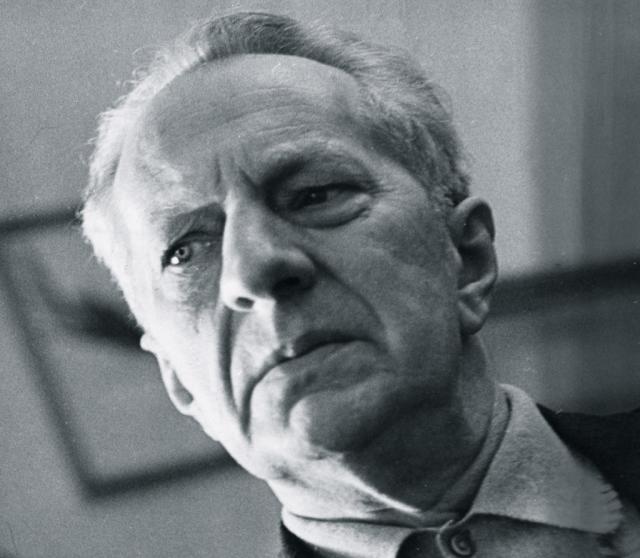
Balys Dvarionas
 Lithuania
Biography of Balys Dvarionas
Early Life and EducationBalys Dvarionas was a Lithuanian composer, conductor, and pianist. He was born into a large family of 11 children, with seven of them becoming musicians. His father, Dominikas Dvarionas, was an organist and was his first music teacher. Later, he studied under the Latvian composer Alfreds Kalniņš. Dvarionas graduated from the Leipzig Conservatory in 1924, specializing in piano, and in 1939, he completed his studies in conducting.
Professional Career
After his studies, Dvarionas further honed his skills under the renowned pianist Egon Petri in Berlin from 1925 to 1926. He then worked as a piano teacher at the Kaunas Music School starting in 1926 and later at the Kaunas Conservatory from 1933. In 1928, he began performing as a pianist and even toured in Moscow and Leningrad in 1933. From 1935 to 1938, he served as the principal conductor of the Lithuanian Radio Symphony Orchestra in Kaunas. In 1940, he organized a symphony orchestra in Vilnius. In 1949, Dvarionas became a professor at the Lithuanian SSR State Conservatory in Vilnius, where he taught until his retirement.
Accomplishments and Recognition
Balys Dvarionas received many accolades throughout his career, including being named a People's Artist of the USSR in 1954. He was also awarded the Order of Lenin and various other orders and medals. Dvarionas made significant contributions to the musical landscape of Lithuania, creating numerous works in various genres. Notable compositions include the ballet "The Betrothal" (libretto by Liudas Gira, 1931), the opera "Dalia" (libretto by Jonas Mačiūnas based on a play by Balys Sruoga, 1958), a symphony (1947), a violin concerto (1948, Stalin Prize winner in 1949), two piano concertos (1960, 1962), a horn concerto (1963), two overtures (1946, 1967), instrumental pieces, choral works, romances, arrangements of folk songs, music for theater (six productions), and music for six films, including the film "Soviet Lithuania" (Stalin Prize, 1952).
Legacy
Balys Dvarionas' works predominantly belong to the romantic style and are often based on quotations from folk music. His contributions to the music scene in Lithuania are still celebrated today. The International Balys Dvarionas Competition for Young Pianists and Violinists takes place regularly in Vilnius, and there is a Balys Dvarionas Musical School named in his honor. Dvarionas' music continues to inspire and captivate audiences, showcasing his immense talent and creativity as a composer, conductor, and pianist.