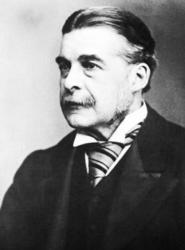
Frederic Chopin
 Poland
Biography of Frédéric Chopin
Frédéric François Chopin, a Polish composer and virtuoso pianist, was born in Żelazowa Wola near Warsaw in 1810. His father, Nicolas Chopin, was a French immigrant serving as a tutor and school teacher, while his mother was from a noble family. Even as a child, Chopin displayed remarkable musical talent, and at the age of 7, he began piano lessons and composed his first small polonaise in G minor. Soon, he became the darling of the aristocratic salons in Warsaw, where he developed a taste for luxury and refined manners.

In 1823, Chopin enrolled in the Warsaw Lyceum and continued to study music privately with Joseph Elsner, the director of the Warsaw Conservatory. In 1825, he was invited to perform before the Russian Emperor Alexander I, and after the concert, he received a diamond ring as a reward. At the age of 16, Chopin was admitted to the conservatory, and upon graduating in 1829, he embarked on a journey to Vienna to introduce his music to publishers and the public.
In 1830, after playing three concerts in Warsaw, Chopin set off on a trip across Western Europe. While in Stuttgart, he learned about the suppression of the Polish uprising. It is believed that the fall of Warsaw inspired him to compose the D minor étude, which is sometimes called the "Revolutionary." After this event in 1831, Chopin never returned to his homeland.
Chopin settled in Paris in 1831 and became a sought-after pianist in the salons of his friends and patrons. Although he rarely gave public concerts, his performances in intimate settings were highly valued. His playing style was unique, characterized by rhythmic freedom and a tasteful articulation of musical phrases. Chopin developed a new harmonic language and introduced forms that could accommodate the romantic content he sought to express.
In 1836, Chopin traveled to the Czech Republic to visit his parents. While in Marienbad, he became infatuated with a young Polish girl named Maria Wodzinska. However, their engagement was soon broken off. Later that year, he met the renowned writer Baroness Aurore Dupin, better known by her pen name George Sand. They began a relationship that lasted for eight years, during which they spent most of their time at Sand's family estate in Nohant. However, their relationship deteriorated in 1847 due to Chopin's interference in Sand's relationship with her children from a previous marriage. This, combined with his deteriorating health, plunged Chopin into a state of melancholy.
Chopin's last public performance in Paris took place on February 16, 1848. Eight days later, the revolution broke out, overthrowing King Louis Philippe. Friends of the composer took him to England, where he played for Queen Victoria and gave a few concerts, with his last performance occurring on November 16, 1848. A week later, he returned to Paris. Unable to give lessons anymore, Chopin had to rely on the generous support of his Scottish admirer, Jane Stirling. His sister Ludwika came from Poland to take care of him, and his French friends also provided him with attention and care. Chopin passed away in his Paris apartment on Place Vendôme on October 17, 1849. As per his request, fragments of Mozart's Requiem were played at his funeral at the Church of Sainte-Madeleine.
Chopin's compositional style was highly innovative and departed from the traditional techniques and conventions of his time. He was an unrivaled creator of melodies and introduced previously unknown Slavic harmonies and intonational elements into Western music, thereby challenging the established classical tonal system of the late 18th century. His music also showcased his mastery of various forms, including mazurkas, polonaises, ballads, nocturnes, etudes, scherzos, waltzes, and more. Despite his short life, Chopin's works continue to be recognized as masterpieces in the world of classical music.