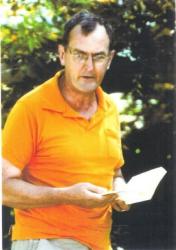
Bartel Leendert Van der Waerden
 Netherlands
- Early Life and Education
- Influences and Academic Career
- Contributions to Mathematics
- Mathematical Physics and Quantum Mechanics
- Historical Investigations
- Legacy and Recognition
Early Life and Education
Bartel Leendert van der Waerden was born on May 2, 1903, in Amsterdam, the Netherlands. He displayed a precocious talent for mathematics at a young age. In 1921, he enrolled at the University of Amsterdam, where he studied under the renowned mathematician Gerrit Mannoury.
Influences and Academic Career
After graduating in 1926, van der Waerden began his doctoral studies at the University of Göttingen, a leading center for mathematics. There, he came under the transformative influence of renowned mathematician Emmy Noether, who instilled in him a deep appreciation for abstract algebraic structures. In 1928, he received his PhD under her supervision.
Contributions to Mathematics
Van der Waerden's research spanned a wide range of mathematical fields, including algebra, algebraic geometry, and mathematical physics. His work on algebra laid the foundations for the modern theory of rings and fields. In algebraic geometry, he contributed to the development of sheaf theory and the theory of algebraic varieties.
Mathematical Physics and Quantum Mechanics
Van der Waerden also made significant contributions to mathematical physics, particularly in the application of group theory to quantum mechanics. Together with Hermann Weyl and Eugene Wigner, he explored the role of symmetry in the foundations of quantum theory.
Historical Investigations
In addition to his groundbreaking mathematical discoveries, van der Waerden was also a renowned historian of mathematics and astronomy. His masterpiece, "Science Awakening" (1950), provided a comprehensive account of the development of mathematics and astronomy in ancient Egypt, Babylonia, and Greece.
Legacy and Recognition
Van der Waerden's influence on mathematics is immense. His classic textbook "Modern Algebra" (1930) became a foundational reference work for generations of students and researchers. He also played a pivotal role in the establishment of international mathematical cooperation, serving as a member of the International Mathematical Union and the American Mathematical Society.
In recognition of his achievements, van der Waerden received numerous awards, including the prestigious Kotenius Medal in 1969. He passed away on January 12, 1996, leaving behind a legacy of mathematical brilliance and scholarly excellence.