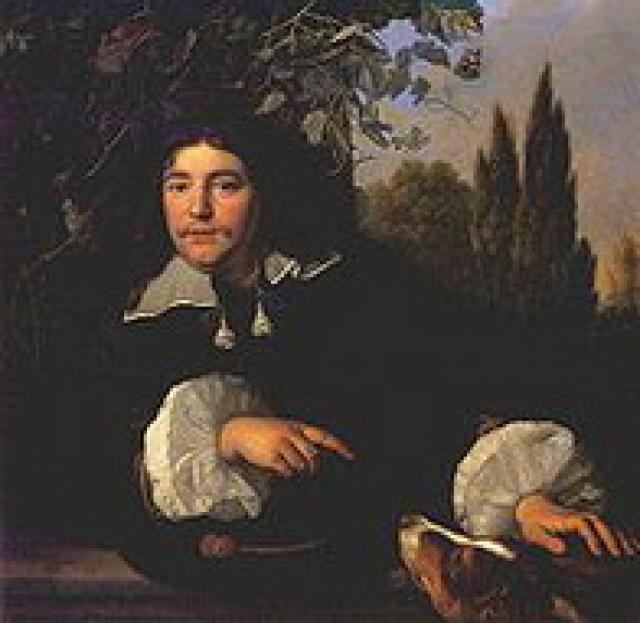
Bartholomeus van der Helst
 Netherlands
- Bartholomeus van der Helst: A Master of Portraiture
- Artistic Influences
- Early Success
- Triumphal Masterpiece
- Style and Recognition
- Later Years and Legacy
Bartholomeus van der Helst: A Master of Portraiture
Born in Haarlem, Bartholomeus van der Helst was the son of an innkeeper. In 1636, following his marriage, he moved to Amsterdam, where he spent the rest of his life, never leaving the Netherlands.
Artistic Influences
It is unclear where Helst received his initial artistic training. He may have studied in Haarlem, but the identity of his first teacher remains unknown. Upon moving to Amsterdam, he is believed to have apprenticed under the prominent early 17th-century painter, Nicolaes Eliasz Pickenoy. While there is no definitive evidence that he studied under Rembrandt, who lived in Amsterdam during the same period, Helst nevertheless adopted elements of Rembrandt's and Frans Hals' portraiture styles.
Early Success
Helst's earliest known painting, a portrait of four governors of the Walloon Orphanage, dates to 1637. Stylistically, the work reflects the influence of Elias. Helst quickly gained recognition and received prestigious commissions. His primary patrons were members of the city's elite, and his subject matter primarily revolved around marksmen's festivities, prize awards, and depictions of governors and benefactors of charitable institutions.
Triumphal Masterpiece
In 1648, Helst created his masterpiece, an enormous group portrait titled, "The Banquet of the Amsterdam Guild of Archers in Celebration of the Peace of Munster." In this canvas, his talent for creating a harmonious multi-figure composition is evident, with each individual character portrayed distinctively and recognizably. The painting hangs in Amsterdam alongside Rembrandt's famous "The Night Watch," allowing visitors to directly compare the works of these two great artists.
Style and Recognition
By the time of Helst's move to Amsterdam, Rembrandt was at the height of his fame. However, Anton van Dyck's elegant style was gaining popularity, and Helst became a prominent exponent of this aesthetic, catering to contemporary tastes. His meticulously detailed, refined portraits, which flattered his subjects to some extent, appealed to the public more than Rembrandt's later works, which grew increasingly introspective and somber.
Despite his popularity, Helst was among those painters who could cater to the demands of high-ranking patrons while adhering to the principles of realism. His technical skill was impeccable, capturing the material reality of objects and the fluid poses and gestures of his models.
Later Years and Legacy
In 1654, Helst became one of the founders of the Guild of Saint Luke. Revered and financially secure, he lived in Amsterdam for the rest of his life, devoting himself to the education of his son, Lodewijk van der Helst, who, however, proved to be a mediocre painter. None of Helst's other students achieved notable artistic success.
During his lifetime, Helst's influence on other artists was significant. Even some of Rembrandt's pupils, such as Ferdinand Bol and Govert Flinck, temporarily adopted his fashionable style. Helst's stature as a painter was acknowledged in subsequent centuries, and he continues to hold a prominent position in the Dutch school. His portraits are praised for their accuracy and harmonious color schemes, placing him directly after van Dyck. However, his work is often considered to lack the depth and psychological profundity of Rembrandt and Hals, preventing his paintings from truly rivalling those of these masters.