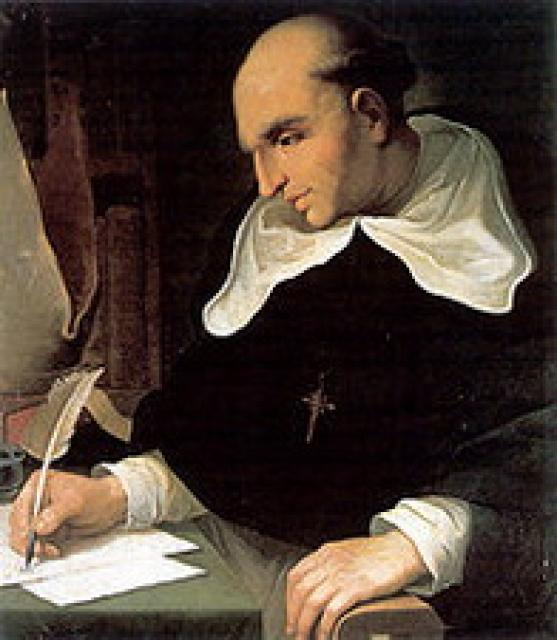
Bartolome de Las Casas
 Spain
Spain- Childhood and Early Life
- Missionary Work and Epiphany
- Advocacy for Indigenous Rights
- Historical Writings and Controversies
- Influence and Legacy
- Dominican Order and Sainthood Cause
- Literary Legacy
Childhood and Early Life
Bartolomé de las Casas was born in Seville, Spain, possibly in 1484 or 1474 (the exact year is uncertain). His father, Francisco, emigrated to the Caribbean island of Hispaniola in 1502, and the young Bartolome accompanied him.
Missionary Work and Epiphany
In 1512, Las Casas traveled to Cuba and became a priest. As a missionary among the Arawak (Taíno) tribe, he witnessed firsthand the жестокое обращение конкистадоров с местным населением. A sermon by a Dominican friar condemning this brutality in 1511 became a turning point in Las Casas' life.
Advocacy for Indigenous Rights
Las Casas dedicated his life to fighting for the rights of the indigenous people of the Americas. He opposed the "encomienda" system, which established a form of forced labor in Spanish America. He proposed bringing African slaves to the Americas instead, but later changed his mind after witnessing the horrors of slavery.
Historical Writings and Controversies
Las Casas wrote extensively about the New World, including "The Brief Account of the Destruction of the Indies" (1552). His writings portrayed the atrocities committed by the conquistadors and became key documents in the "Black Legend" of Spanish colonialism. He also played a pivotal role in the 1550 Valladolid debate, where he confronted Juan Ginés de Sepúlveda over the treatment of indigenous peoples.
Influence and Legacy
Las Casas' writings had a profound influence on European attitudes towards the New World. They inspired Montaigne and other thinkers to question colonial policies. Despite the victory of the encomienda system, Las Casas' legacy as a tireless advocate for human rights endures.
Dominican Order and Sainthood Cause
Las Casas joined the Dominican order in 1522 and became an ordained priest. His writings and activism continued throughout his life. In 2000, the Catholic Church initiated the process of his beatification.
Literary Legacy
Las Casas' writings have been cited in numerous works of literature, including the stories of Jorge Luis Borges. His life and perjuangan have become synonymous with the fight for justice and the defense of the oppressed.





