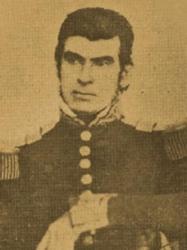
Batyr Bayan
 Kazakhstan
- Baian Kasabolatuly: A Kazakh Warrior
- Alliance with Abylai Khan
- Contributions to Kazakh Liberation
- Death and Legacy
Baian Kasabolatuly: A Kazakh Warrior
Early Life and Military InvolvementBaian Kasabolatuly was born in 1714 in the village of Aralagash, present-day North Kazakhstan Region. His father, Kasabolat, was a jeweler, while his mother, Ajar, was the daughter of Sholam Batyr and sister of Data, the father of Syrym Datuly, a renowned leader of an anti-government uprising. Baian himself belonged to the Uak clan, Shoga subclan. From a young age, he participated in various military campaigns alongside his elder relative, Sary Batyr. At the age of 17, he became the commander of an army unit.
Alliance with Abylai Khan
Over time, Baian rose to become one of the main batyrs (warriors) of Abylai Khan. Legend has it that their first encounter occurred during a battle with the Kalmyks. Abylai Khan's group of warriors was surrounded by enemies, and he was on the verge of capture. At that critical moment, Baian appeared and fought his way through the enemy ranks, creating a corridor for Khan's escape. Impressed by Baian's bravery, resourcefulness, and intelligence, Abylai Khan highly valued him as a military ally.
Contributions to Kazakh Liberation
Together with other notable batyrs such as Malaisaory, Zhanatai, Kabambay, and Olzhabay, Baian participated in battles to liberate the Kalbin lands, the Tarbagatai region, and the Irtysh River basin from the Dzungar invaders. He distinguished himself in the battles of Akshaulyn near Ayaguz and the 80-day-long Shorghyn battle at the foot of the Tarbagatai Mountains. His efforts played a significant role in securing Kazakh political and territorial unity during the two-century Kazakh-Dzungar war.
Death and Legacy
The exact date and place of Baian's death remain uncertain. Most historians place his demise in 1772, though there are conflicting accounts. One theory suggests he fell in battle, while another claims he died after drinking water contaminated with the corpses of Dzungar soldiers. His burial site has yet to be discovered, with one possible location being near the village of Karabulak in the Shard region of Karaganda Oblast. Despite the mysteries surrounding his end, Baian Kasabolatuly's legacy as a fearless warrior who fought tirelessly for his people continues to inspire generations of Kazakhs.