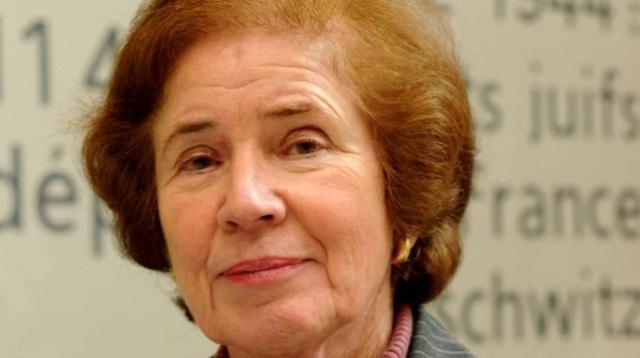
Beate Klarsfeld
 France
- Beate Klarsfeld: A Life Dedicated to Unmasking Nazi Criminals
- Early Life and Awakening
- Marriage and Early Activism
- Electoral Debut
- Attempted Kidnapping and Sentencing
- International Recognition
- Pursuit of Walter Rauff and Josef Mengele
- High-Profile Conviction
- Continued Advocacy
- Literary and Documentary Contributions
- Cinematic Portrayal and Honors
Beate Klarsfeld: A Life Dedicated to Unmasking Nazi Criminals
Beate Klarsfeld, a German journalist, emerged as a fearless advocate in the post-war era, relentlessly pursuing the exposure of Nazi war criminals. The German media often refer to her as one of the "Nazi hunters."
Early Life and Awakening
In 1960, Beate Klarsfeld arrived in Paris as an au pair. While there, she began to confront the horrors of the Holocaust, which had been largely concealed from her in Germany. Working for a German-French youth organization, she was fired after publishing an article denouncing German politician Kurt Georg Kiesinger.
Marriage and Early Activism
In 1963, Beate married French Jew Serge Klarsfeld, with whom she had two children. In 1968, she attempted to draw attention to Kiesinger's Nazi past at a Bundestag meeting, shouting "Nazi, resign!" before being escorted out by security guards. In November, she repeated her bold action at a CDU party meeting in Berlin, confronting Kiesinger with the words "Nazi, Nazi!" and slapping him in the face.
Electoral Debut
In 1969, Beate Klarsfeld ran for the Bundestag against Kiesinger as a candidate for the "Action for Democratic Progress" party.
Attempted Kidnapping and Sentencing
In 1971, the Klarsfelds attempted to kidnap Nazi war criminal Kurt Lischka from Germany to stand trial in Paris. Beate was sentenced to two months in prison for her involvement, but public outcry swayed the sentence to a suspended one. Lischka himself was not convicted until 1979.
International Recognition
In 1974, Beate Klarsfeld was awarded the "Medal for Courageous Fighters of the Ghetto" in Israel. Throughout the 1970s, she continued to raise awareness about Nazi collaborators, exposing the political activities of Ernst Achenbach.
Pursuit of Walter Rauff and Josef Mengele
In the mid-1980s, Klarsfeld searched for Walter Rauff and Josef Mengele in Chile and Paraguay. In 1986, she offered to exchange herself for Israeli prisoners in Beirut, but the offer was declined.
High-Profile Conviction
On July 4, 1987, after fifteen years of pursuit by Beate Klarsfeld, Klaus Barbie, a notorious Nazi criminal, was convicted. Klarsfeld considers this her greatest achievement in uncovering Nazi war criminals.
Continued Advocacy
Since 1991, she has campaigned for the extradition of Alois Brunner, Adolf Eichmann's deputy, from Syria. In 2001, France sentenced Brunner in absentia to life in prison.
Literary and Documentary Contributions
Together with her husband, Beate Klarsfeld published several books, including a list of 80,000 Jewish names and over 11,000 photographs of Jewish children deported from France during World War II. The French and German railways exhibited these photographs at their stations.
Cinematic Portrayal and Honors
In 2008, Franka Potente portrayed Beate Klarsfeld in the French film "La Traque," which depicted the search for Klaus Barbie. In 2009, the Left Party proposed her for the Order of Merit of the Federal Republic of Germany. Notably, this same party later nominated her for the presidency of Germany in 2012.