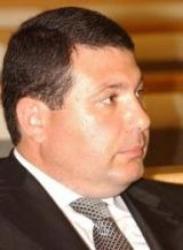
Bela Kun
 Hungary
- Biography of Béla Kun
- Leadership in the Hungarian Soviet Republic
- The Hungarian Soviet Republic and its Downfall
- Later Life and Death
Biography of Béla Kun
Béla Kun was a Hungarian communist political figure and journalist who proclaimed the Hungarian Soviet Republic in 1919. He was born into a family of a Transylvanian rural notary, an ethnic Jew, and a Calvinist (a religious minority in Catholic Hungary). Due to his background, Kun was later subjected to persecution and ridicule by right-wing chauvinists in the press. He received his secondary education at one of the largest Calvinist colleges in Kolozsvár (Cluj-Napoca), during which time Kun was awarded a prize for the best literary work (his essay was dedicated to Sándor Petőfi). After completing school, he enrolled in the University of Kolozsvár's law faculty, but interrupted his studies in 1904 to work as a journalist in Kolozsvár and Nagyvárad. He faced several trials for his journalistic activities and in 1907 was even sentenced to six months of imprisonment, later commuted to community service. While still a student, Kun became acquainted with the activities of left-wing intellectuals in Budapest through his close friend, the poet Endre Ady. At the age of 16 in 1902, with their help, he became a member of the Hungarian Social Democratic Party and by 1913 was already serving as a delegate at the party's congress. During World War I, Béla Kun was drafted into the Austro-Hungarian army, and in 1916 he became a prisoner of the Russian army while fighting in Ukraine. As a prisoner of war, he was sent to the Urals where he solidified his commitment to communism. While in captivity, Kun thoroughly studied Russian in addition to German and English. After the February Revolution in 1917, Kun joined the Tomsk branch of the Russian Social Democratic Labor Party and soon became a prominent figure in the Bolshevik Party. Paradoxically, Kun had considerable apprehension towards Russia and the Russians, believing that communist ideology was better suited to "civilized" Europe rather than "barbaric" Russia. In March 1918, Kun, together with his like-minded comrades, formed the Hungarian Section of the Russian Communist Party (Bolsheviks), the predecessor to the Hungarian Communist Party. He soon arrived in Petrograd and then Moscow, where he met with Vladimir Lenin, who entrusted him with leading the communist movement in Austria-Hungary. However, Kun, along with his Hungarian party comrade Mátyás Rákosi, was more aligned with the radical wing of the Bolshevik Party, which included the majority of the "left" communists. Kun was not drawn to Lenin's pragmatism and sober perspective, but rather to the beliefs of Grigory Zinoviev and Karl Radek, who believed that the revolution placed itself above all and would accept any means necessary (which is why Kun is known as one of the main organizers of the Red Terror). Conversely, Lenin himself referred to these proponents among foreign communists as "kunerists".

Leadership in the Hungarian Soviet Republic
Throughout 1918, Béla Kun fought on the frontlines of the Russian Civil War against German interventionists, the Czechoslovak Corps, and the White Army of Kolchak. He also participated in suppressing the Left Socialist-Revolutionary uprising and uprisings by right-wing Socialist Revolutionaries, using the most brutal methods. In addition, he actively wrote articles in "Pravda" and "Izvestia". Kun returned to Budapest after the fall of the Austro-Hungarian Empire on November 17, 1918, and on November 24, he initiated the foundation of the Hungarian Communist Party (initially the Party of Communists of Hungary, KMP) and became the leader of its Central Committee. In the party's official publication, "Red Newspaper" ("Vörös Újság"), he harshly criticized the Karolyi government and also made strong remarks about the social democrats, who nonetheless expressed their desire for dialogue with the communists. As the leader of the Communist Party, Kun actively organized workers' strikes and rallies to expand the party's base, which initially only consisted of a few hundred representatives of radical intellectuals.
The Hungarian Soviet Republic and its Downfall
On February 22, 1919, Kun's supporters, capitalizing on widespread dissatisfaction with the bourgeois government, organized a congress merging the Communist and Social Democratic (led by Sándor Garbai) parties into the Socialist Party. The new party immediately declared the formation of the Hungarian Soviet Republic, the second European country with a left-radical government after Russia, and also released Kun from prison. The revolutionary government was led by Sándor Garbai, and Béla Kun himself held the position of Foreign Minister. However, he was the de facto leader of the Hungarian Soviet Republic, as he claimed in a message to Lenin: "My personal influence in the Revolutionary Government is so great that the dictatorship of the proletariat will be decisively established."
In the Hungarian Soviet Republic, radical transformations were initiated following the example of Russia, including the nationalization of industry and the creation of collective farms. After an attempted counter-revolutionary coup on June 24, 1919, Kun announced the necessary implementation of the Red Terror. However, former social democrats strongly opposed the use of terror, resulting in a death toll of no more than 590 individuals, mostly directly associated with conspirators (the number of victims of the White Terror exceeded this figure by more than a hundred times).
However, the young Soviet republic was unable to defend itself against external threats. Active military operations were launched against it by Czechoslovak and Romanian forces. Initially, the Red Army, led by the prominent strategist Aurél Stromfeld, achieved success, occupying almost all of Eastern and Southern Slovakia and proclaiming the Slovak Soviet Republic. However, the Entente demanded that Hungary withdraw from the occupied territories, and although the Hungarian government complied and withdrew its troops from Slovakia, it continued to fund forces opposing the Soviet Hungary. Soon, in Szeged, Rear Admiral Miklós Horthy organized an opposition force to the socialists, the National Army, with which he fought against the Red Army. The White forces led by Horthy and Transylvanian aristocrat István Bethlen soon initiated the White Terror, claiming the lives of approximately 70,000 socialist supporters, as well as Jews and random individuals. Kun tried to negotiate a peaceful agreement with the Entente and even met with South African Prime Minister General Jan Smuts in Budapest, but England and France did not respond to these negotiations. Soviet Russia also failed to provide assistance to Hungary as it was preoccupied with Kolchak's offensive, followed by Denikin's advance, which tied up the main forces of the Red Army. The Hungarian Soviet Republic fell on August 1, 1919, after 133 days of existence. Béla Kun and his comrades emigrated to Vienna, and later returned to Russia, where he regained his membership in the Russian Communist Party (Bolsheviks). In October 1920, he was appointed a member of the Revolutionary Military Council of the Southern Front. On November 16, the Crimean Revolutionary Committee was formed, with Béla Kun as its chairman. After the evacuation of General Wrangel's Russian Army from Crimea, Frunze, the commander of the Southern Front, promised broad amnesty to the remaining officers of Wrangel's army if they registered. However, Trotsky, having frightened the Soviet leadership with the prospect of "forty thousand fierce enemies of the revolution" being left to their own devices in Soviet Russia, managed to secure the destruction of the officers remaining in Crimea. Kun, together with Rozalia Zemlyachka, began mass shootings of the remaining officers and soldiers of Wrangel's army in Crimea, representatives of the bourgeoisie, and former privileged classes. Between 1920 and 1922, 50,000 to 100,000 people were killed in Crimea, according to various sources. Kun is also responsible for the persecution of ethnic minorities in Crimea in 1920. From 1921, he was a member of the Executive Committee of the Communist International. In 1921, he was sent to Germany, where he tried to incite a communist uprising. From 1921 to 1923, he was involved in leading party work in the Urals. From September 1923, he was appointed by the Central Committee of the Russian Communist Youth Union to the Central Committee of the All-Union Leninist Young Communist League. In April 1928, he was arrested in Vienna for his revolutionary activities, but was released after a loud campaign organized by the Soviet Union. From 1936 to 1938, during the Spanish Civil War, he was a member of the communist leadership in Spain, participating in the establishment of communist intelligence services, which were responsible for the deaths of thousands of Spaniards.
Later Life and Death
Béla Kun worked at the "Goslit" publishing house, translating from Hungarian. During Stalin's Great Purge, Kun, who lived in Moscow, was arrested by the NKVD on charges of Trotskyism. The senselessness of the accusations was evident since Kun was a fanatical Stalinist, but he was still repressed after 1937. The exact date of Kun's death is unknown; it is only known that he was subjected to severe torture by the NKVD. In 1989, the Soviet government announced that Kun was killed in a camp on August 29, 1938. Other sources mention the date as November 30, 1939. Kun's widow, Irén Gal, as well as his son and nephew, were also sent to camps. Béla Kun was rehabilitated during the process of de-Stalinization in 1956.