Benjamin Peirce
 USA
USABiography of Benjamin Peirce
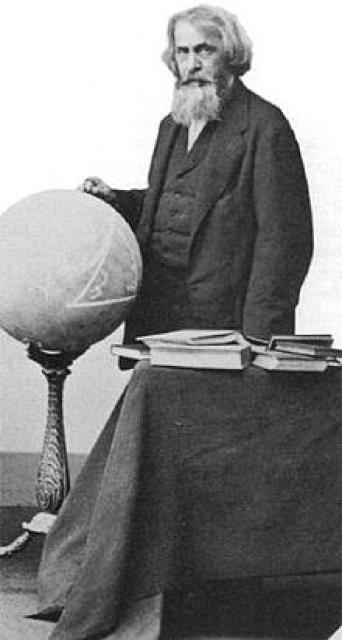
Benjamin Peirce, an American mathematician, is often regarded as one of the earliest American scientists whose research gained international recognition. Born on April 4, 1809, in Salem, Massachusetts, Peirce's father, Benjamin, was a librarian at Harvard, and his mother's name was Lydia. After graduating from Harvard, Peirce became an assistant professor at the university and was later appointed as a professor of mathematics in 1831. In 1842, he added teaching astronomy to his work, and he remained a Harvard professor until his death. Peirce played a significant role in the development of the curriculum at Harvard and served as the university librarian. From 1867 to 1874, he was the director of the National Oceanographic and Atmospheric Administration.
Contributions to Mathematics
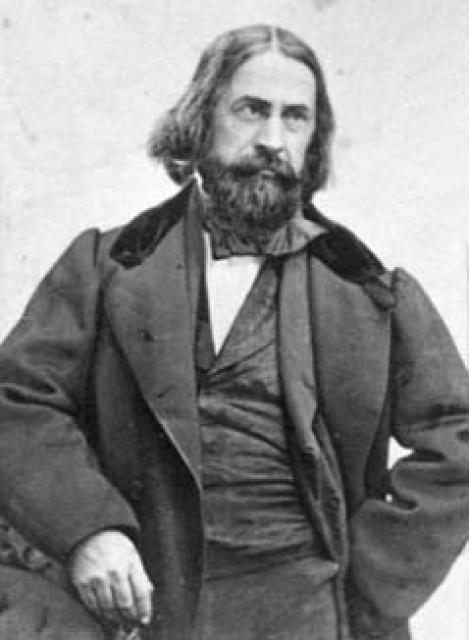
Peirce made significant contributions to celestial mechanics, statistics, number theory, algebra, and the philosophy of mathematics. In number theory, he proved that there are no odd perfect numbers with fewer than four prime factors. He gained recognition in algebra for his study of associative algebras and introduced the concepts of idempotent and nilpotent elements in 1870, as well as presenting the Peirce decomposition. In the philosophy of mathematics, Peirce became well-known for his statement that "mathematics is a science that draws necessary conclusions." This definition later influenced his son, Charles Sanders Peirce, a mathematician and scientist known as the "father of pragmatism." Similar to George Boole, Benjamin believed that mathematics could be used to study logic.
Statistical Contributions
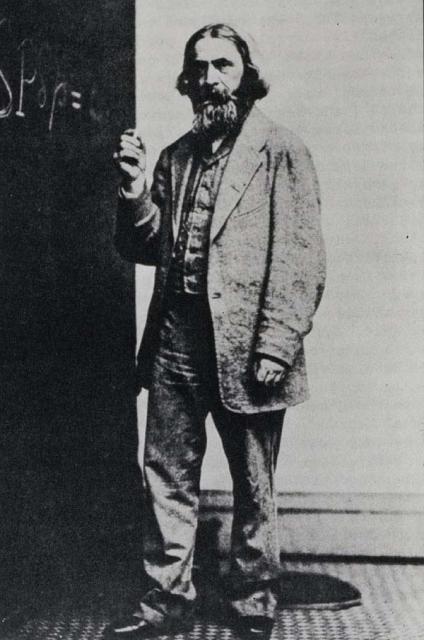
Peirce proposed the use of what later became known as the Peirce criterion in statistics for handling outliers and unusual measurements. His ideas were further utilized by his son, Charles Sanders Peirce. In 1868, Benjamin served as an expert witness in a legal case where he was assisted by his son Charles. Armed with statistical analysis and probability theory, they proved that the will presented by Henrietta Howland Robinson, the niece of Sylvia Ann Howland, was forged. Henrietta wanted to inherit her aunt's vast fortune and presented a new will allegedly signed by Sylvia. Benjamin Peirce mathematically demonstrated that Henrietta had falsified the signature, putting an end to the five-year legal dispute.
Personal Life
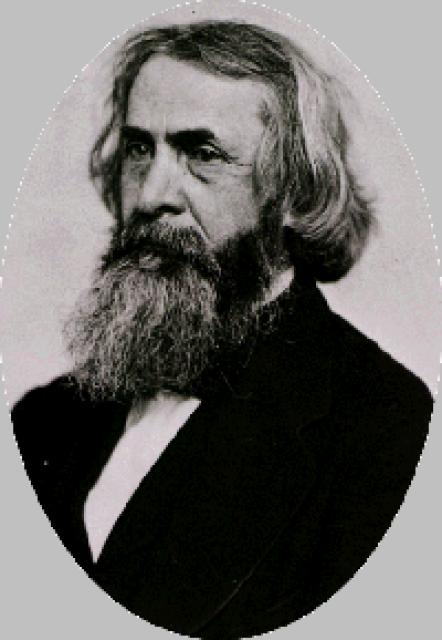
Peirce was a firm believer in God, although he rarely published his theological thoughts. According to one encyclopedia, he regarded mathematics as the study of God's work by God's creations. He was a proponent of the slavery system, justifying it if it helped the elite conduct scientific research. Benjamin was married to Sarah Hunt Mills, the daughter of American Senator Elijah Hunt Mills. The couple had four sons and one daughter. The lunar crater Peirce was named in honor of the mathematician, and the ship "Benjamin Peirce" was named after him, serving as a hydrographic vessel for the National Oceanographic and Atmospheric Administration from 1855 to 1868.


