Benny Begin
 Israel
- Biography of Beni Begin
- Early Life
- Political Career
- Political Achievements
- Search for Truth
- Personal Life
Biography of Beni Begin
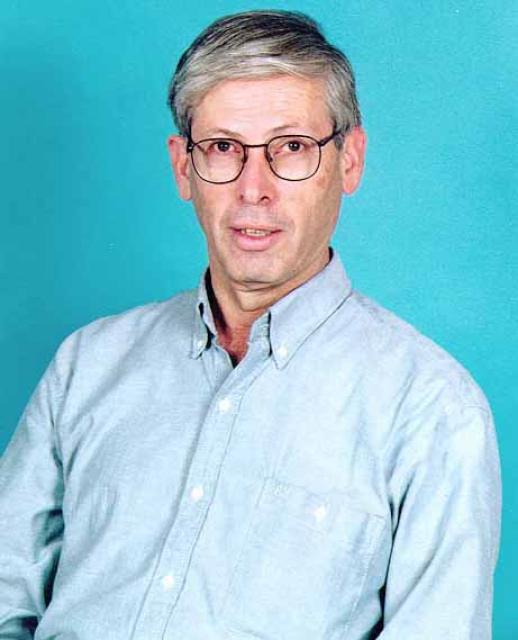
Beni Begin is an Israeli geologist and statesman, the son of former Prime Minister of Israel Menachem Begin. Despite his stern and pedantic appearance, those who know him closely describe him as an open, sincere person with a strong and whole personality, endowed with a great sense of humor. Until January 15, 1997, Binyamin Ze'ev Begin (Member of the Israeli Parliament from the Likud Bloc) held the position of Minister of Science. On that day, during a government meeting, he voted against the withdrawal from Hebron. Moreover, he sent a letter to the Prime Minister, the text of which fit into one line: "I hereby resign." It should be explained that Israeli law does not allow a minister to oppose the decisions of his own government. In simpler terms: if you want to stay in office (cabinet, assistants, advisors, secretary, "Volvo", personal driver, and press attaché), follow strict government discipline. Show indiscipline - get out of the car. On the morning of January 16, Beni Begin entered the Knesset (parliament) chamber and sat in the auditorium with ordinary deputies. Even from the chosen place (usually ministers sit in the front row behind a semicircular table), it could be unmistakably determined that his decision to resign was final and not subject to appeal. The firmness of this intention was also evident in his speech at the plenary session.
Early Life
Beni Begin was born in 1943 in Jerusalem. His childhood was associated with his father's underground activities as the commander of the Irgun Tsvai Leumi organization, which fought against British colonizers. Beni remembered that his family constantly moved from one apartment to another, and his father often changed his appearance, trying to avoid British authorities. Sometimes he came home with a beard, sometimes without it. Sometimes he introduced himself as Israel Sassover, and sometimes as Dr. Kenigfofer. "Beni recognized me only by my voice," said Menachem Begin, who became the Prime Minister of Israel. In the early 1950s, Beni studied at the "Carmel" high school in Tel Aviv. To defend his father's honor and good name, he often had to argue with his classmates. Sometimes it even led to fights. In the upper grades, Beni excelled in mathematics and physics. However, he entered the university on the faculty of geology. He defended his doctoral dissertation in the United States, at the University of Colorado, which allowed him to become fluent in English. Or maybe, on the contrary, he mastered English perfectly, which is why he decided to get a doctorate degree overseas. Who knows... He served in the army in the air force (according to some sources, in military intelligence) and holds an officer rank.
Political Career
In 1977, the Likud party won the parliamentary elections. Menachem Begin became the head of the government, referred to by many American newspapers as a "terrorist." Beni Begin was furious, so he called Simcha Dinitz, the Israeli ambassador to the United States, and demanded that he take action against the American press, which was hostile to Likud and his father. How did Beni Begin react to the Camp David Accords? According to the press of the early 1980s, when Begin senior was in Camp David, he constantly talked on the phone with his son. Beni did not agree with his father's position during the negotiations with Egyptian President Anwar Sadat but supported him morally. He demanded that his father not sign agreements with Sadat. However, when he realized that it was inevitable, he persuaded the Prime Minister not to make concessions to Egypt. Since then, the father and son became even closer. During his father's illness, Beni visited him daily and did not allow anyone else to approach him. This period, until Menachem Begin's death in 1992, remained a family secret. Only Beni knows how his father felt during those years, what he remembered, and what he regretted. "People should be judged by their actions, not by who their parents are," Beni Begin once said in an interview with Haaretz newspaper. No photograph of him with his family - wife Ruth and six children, with his friends, on a walk, in a restaurant, during foreign trips - has been published in newspapers. Many publications in the Israeli press call him an "alien" or a "man from the last century." But in all the extensive materials about him, one can find one and the same - an extremely unfashionable and outdated definition in Israel: "honest." "An honest person in politics? But that doesn't exist, right?" Well...
Political Achievements
Beni Begin was elected as a Knesset member in the 12th convocation after the 1988 elections. From then on, his political career began. "Beni Begin is the only Knesset member of the 12th convocation who refused to accept money for transportation expenses," wrote the newspaper "Yerushalayim." However, his name is associated with many astonishing stories. Many parliamentarians are very concerned about ensuring that their names regularly appear in the press and establish friendly relations with journalists. But Beni Begin is an exceptional person in this regard. He does not chase after journalists, does not rush to the podium without need, does not seek sensational topics that could make headlines, does not torment ministers with parliamentary inquiries, and does not talk about his far-reaching plans. He deeply studies the issues. Perhaps he is a representative of a new generation of Knesset members? Beni Begin has always maintained a reasonable and balanced political position. He never fell into extremes. In December 1992, he criticized Prime Minister Yitzhak Rabin's decision to deport Hamas activists to Lebanon. And he was right: the deportation became a pretext for the escalation of Arab terrorism. Later, when buses began to explode one after another in Israel, Begin opposed the deportation of the families of suicide bombers. But despite his liberalism, he firmly believed that entering into peace negotiations with a terrorist organization was akin to death. "The PLO is a terrorist organization," he insisted. "The PLO is the greatest fraud of the 20th century. It does not back down or give up anything. It continues on its path." As for the rights of Palestinians, he wrote in 1990: "They have no rights. If they exercise rights they don't actually possess, it will come at the expense of our rights, which will jeopardize our existence. No other arguments are needed."
Search for Truth
After the Israeli government signed the first agreement with the PLO on September 9, 1993, Beni Begin's energy was focused on searching for and collecting various documents (including recordings and videotapes) that shed light on the true intentions of the PLO. The newspaper "Maariv" on January 24, 1995, reported under the headline "Report from the Military Prosecutor's Office: Violation of the Oslo Accords." The text read: "Beni Begin, a Knesset member from the Likud party, presented a report from the military prosecutor's office to the parliamentary committee on foreign affairs and defense, which outlined the facts of numerous violations of the agreement by the Palestinians signed in Oslo. However, Ori Orr, the chairman of the committee, told Begin that Foreign Minister Shimon Peres denied the existence of the document." A few days later, the Israeli press was forced to publish a detailed list of the most blatant violations, information about which had been carefully concealed. The newspaper "Yediot Ahronot" on February 1, 1995, published an article titled "Another IDF Document - Oslo Accords Violated." The text read: "A document confirming the violations of the Oslo Accords was brought to light by Knesset member Beni Begin. Unlike last week when he made public a document prepared by the military prosecutor's office, this time it is a document that was placed on the desk of the Director-General of the Ministry of Foreign Affairs, Uri Savir. The document lists numerous violations of the agreement by the Palestinians. Begin presented this document and emphasized that many lines listing the violations were left unanswered." The newspaper "Yediot Ahronot" on May 12, 1996, reported, "Knesset member Begin: Peres falsified the minutes of the Palestinian National Council meeting, which stated that the Palestinian Charter was canceled. Office of the Prime Minister: this is a lie." - "Beni Begin is the only minister who has had the courage to treat the facts with utmost seriousness and responsibility, without trying to evade the truth," said Igael Carmon, an advisor to former Prime Minister Yitzhak Shamir. - "It is not easy to be a professional politician. It requires specific knowledge and analytical thinking." - "They say that a person is judged by their actions," Carmon once asked him. - "Statements, speeches are often actions," he replied. According to Carmon, Beni Begin says what he thinks and acts based on what his conscience tells him. But most importantly, he does not yield to pressure. - "He has had to withstand organized attacks from security services and the army on more than one occasion," Carmon explains. - "But that didn't break him. He repeatedly proved that he was right, and they were wrong." As an example, he cited the story with a secret document from the military prosecutor's office that Begin made public. What measures were not threatened against the defiant deputy! Later, Carmon shared how Beni Begin exposed the secret collusion between Arafat and Hamas. - "Initially, government ministers and even the Chief of General Staff denied the existence of such an agreement," he said. - "But Beni stubbornly insisted, 'The agreement exists!' Only later did the Deputy Head of the Intelligence Directorate of the General Staff present a document signed by five colonels, confirming that Arafat and Hamas leaders had reached an understanding. Peres did everything he could to prevent Begin from publishing this document, but he failed." According to Israeli newspapers at the time, Beni Begin inputted all the documents into his portable computer, which he brought to every government meeting. If necessary, he could instantly retrieve the required document from his computer. Perhaps that's how a professional politician should work?
Personal Life
After stepping down as Minister of Science, Beni Begin remains silent. However, it is said that he lives with his wife and six children in a modest apartment in Jerusalem and uses public transportation. When Menachem Begin was photographed for the newspapers, Beni and his children were not in the pictures. When invited to a state-funded dinner, he tactfully declined. In 1988, just days before the elections, Beni decided to run for office and was elected as a Knesset member in the 12th convocation. Since then, his political career has continued. "Beni Begin is the only Knesset member of the 12th convocation who refused to accept money to cover transportation expenses," wrote the newspaper "Yerushalayim." However, his name is associated with many astonishing stories. Many parliamentarians are very concerned about ensuring that their names regularly appear in the press and establish friendly relations with journalists. But Beni Begin is an exceptional person in this regard. He does not chase after journalists, does not rush to the podium without need, does not seek sensational topics that could make headlines, does not torment ministers with parliamentary inquiries, and does not talk about his far-reaching plans. He deeply studies the issues. Perhaps he is a representative of a new generation of Knesset members? Beni Begin has always maintained a reasonable and balanced political position. He never fell into extremes. In December 1992, he criticized Prime Minister Yitzhak Rabin's decision to deport Hamas activists to Lebanon. And he was right: the deportation became a pretext for the escalation of Arab terrorism. Later, when buses began to explode one after another in Israel, Begin opposed the deportation of the families of suicide bombers. But despite his liberalism, he firmly believed that entering into peace negotiations with a terrorist organization was akin to death. "The PLO is a terrorist organization," he insisted. "The PLO is the greatest fraud of the 20th century. It does not back down or give up anything. It continues on its path." As for the rights of Palestinians, he wrote in 1990: "They have no rights. If they exercise rights they don't actually possess, it will come at the expense of our rights, which will jeopardize our existence. No other arguments are needed."