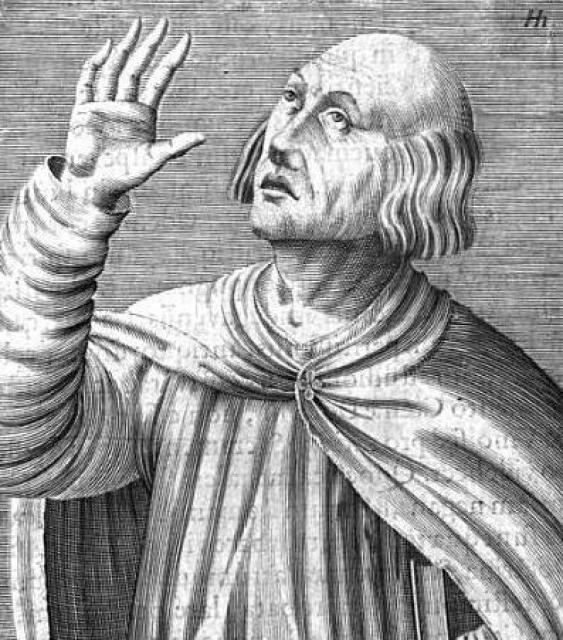
Berengar of Tours
 France
- Berengar of Tours: A Trailblazing Theologian
- Nominalist Leanings
- "On the Holy Supper" and Controversies
- Confrontation and Disputation
- Condemnation and Retraction
- Legacy
Berengar of Tours: A Trailblazing Theologian
Early Life and InfluencesBerengar of Tours (c. 1000 - January 6, 1088) emerged as a significant French philosopher-scholastic and theologian during the 11th century. He studied under Bishop Fulbert of Chartres, renowned for his scholarship and influence on Berengar's intellectual development.
Nominalist Leanings
Berengar's theological stance aligned with nominalism, a philosophical approach emphasizing the importance of individual objects and the rejection of universal concepts. This stance challenged prevalent views within the Church at the time.
"On the Holy Supper" and Controversies
Berengar's most notable work, "On the Holy Supper" (1049), sparked controversy. He criticized the mystical interpretation of the sacrament of the Eucharist, advocating instead for a more rationalist approach. His views clashed with the teachings of the Church, leading to heated debates.
Confrontation and Disputation
Berengar's confrontations with the Church extended beyond the sacrament. He questioned the doctrine of transubstantiation, the belief that bread and wine literally become the body and blood of Christ. His ideas drew the ire of ecclesiastical authorities.
Condemnation and Retraction
In 1079, Berengar participated in a theological disputation with Bruno of Asti at the Roman Synod. His teachings were condemned as heretical, primarily due to the efforts of Lanfranc, a former student of Berengar. Under pressure, Berengar recanted his views and was placed under ecclesiastical surveillance.
Legacy
Despite his condemnation, Berengar's ideas left an imprint on theological discourse. His nominalist approach paved the way for future philosophical advancements. His emphasis on reason and critical inquiry challenged the authority of the Church, contributing to the intellectual ferment of the 11th century.





