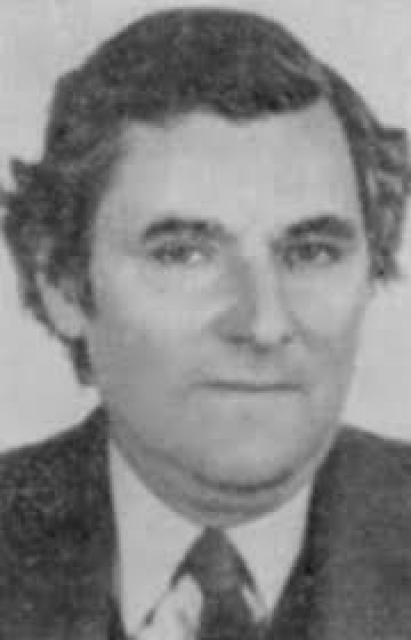
Bernard Guinot
 France
- André Guinot: A Pioneer in Astronomy and Timekeeping
- Research at the Paris Observatory
- International Bureau of Time (BIH)
- Cosmic Geodesy and Global Positioning
- Space Experiments and Planetary Studies
- Leadership Roles and Honors
André Guinot: A Pioneer in Astronomy and Timekeeping
Early Life and EducationAndré Guinot (1926-2016) was a distinguished French astronomer who made significant contributions to the fields of Earth rotation, coordinate systems, and timekeeping. He served in the French merchant navy from 1945 to 1952 while simultaneously pursuing his studies at the University of Paris, graduating in 1952.
Research at the Paris Observatory
From 1952 to 1964, Guinot worked at the Paris Observatory, where he collaborated with André Danjon on the development of the method of equal heights. He demonstrated the high accuracy of this method in determining star positions using Danjon's astrolabe. Guinot also played a crucial role in promoting international cooperation to improve fundamental astronomical catalogs.
International Bureau of Time (BIH)
In 1964, Guinot succeeded N. M. Stoyko as the director of the International Bureau of Time (BIH). During his tenure from 1964 to 1979, he refined the BIH's atomic time scale and extended its applications. In 1971, the BIH's International Atomic Time (TAI) was officially recognized by the 14th General Conference on Weights and Measures.
Cosmic Geodesy and Global Positioning
Guinot's research also focused on cosmic geodesy and global positioning. He developed innovative methods for determining the coordinates of the Earth's pole and the irregularities of its rotation. His statistical method allowed for rapid global estimates of these parameters using astronomical observations. Guinot played a pivotal role in the development and implementation of Coordinated Universal Time (UTC).
Space Experiments and Planetary Studies
Guinot participated in numerous space experiments, including the determination of the Earth's pole position using Doppler measurements and laser ranging of the Moon. He conducted extensive studies on the radial velocities of Venus and Mercury, as well as the atmospheric motions of Venus using spectroscopic techniques.
Leadership Roles and Honors
Guinot served as the president of the International Astronomical Union's Commission 19 on "Rotation of the Earth" from 1961 to 1967 and as the president of the Federation of Astronomical and Geodetic Services from 1970 to 1973. He was a member and later president of the Bureau des Longitudes in Paris. Guinot's remarkable contributions were recognized through numerous awards and honors.