
Bernardo Bertolucci
 Italy
ItalyBiography of Bernardo Bertolucci
Bernardo Bertolucci was born on March 16, 1940, in the Italian city of Parma. His father, Attilio Bertolucci, was a poet and film critic who encouraged his son's interest in art and often took him to film sets. Bertolucci grew up in an intellectual environment surrounded by poets, writers, cinematographers, and history professors. At a young age, Bertolucci began making his own amateur films. In 1957, his film "La funivia" was released, followed by "La morte del maiale" in 1958.

While studying at the Faculty of Philosophy at the University of Rome, Bertolucci met the Italian director Pier Paolo Pasolini. He worked as an assistant on Pasolini's film "Accattone" and participated in the creation of several other works by Pasolini. In 1962, Bertolucci had a turning point in his life. He published a collection of poems titled "In Search of Mystery," dropped out of university, and directed his first feature film, "La commare secca." The film, influenced by Pasolini, featured non-professional actors and depicted the lives of the lower class in Rome, with a strong social critique. The success of his debut film propelled Bertolucci's career.

In 1964, his film "Before the Revolution" was released, telling the story of a young bourgeois intellectual who turns to Marxism. This autobiographical film gained popularity, especially among the youth, due to its romantic spirit. "Before the Revolution" showcased Bertolucci's ability to navigate different styles and influences within Italian cinema. He combined elements of Visconti's refined taste, Antonioni's psychological depth, Fellini's metaphoric storytelling, and Pasolini's eccentricity and rebelliousness.
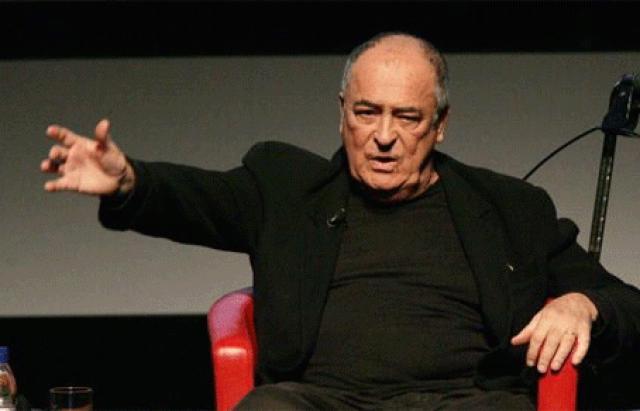
In 1972, Bertolucci released "Last Tango in Paris," which became his most scandalous and infamous film. While it deviated from his main directorial theme of "identity and society," the film shocked the audience with explicit sexual scenes, including the infamous "butter scene." The film portrayed the voluntary solitude of the protagonist as a protest against society. "Last Tango in Paris" faced bans in several countries but gained immense popularity, particularly in France. Marlon Brando, the lead actor, received an award from the US film critics, and Maria Schneider, the female lead, received a special award from the Italian film award "David di Donatello."

After the unsuccessful films "Luna" (1979) and "Tragedy of a Ridiculous Man" (1981), Bertolucci temporarily moved away from Italian-themed films and embarked on what became known as his "cosmopolitan period" in England. He then spent many years living in the East, which influenced his work as he tried to understand a different mentality, consciousness, and culture as a European. One of the most famous films from this period was the historical epic "The Last Emperor" (1987), which depicted the life of the last emperor of China, Pu Yi. The film was highly acclaimed and won nine Academy Awards in the United States.

In 1993, Bertolucci released "Little Buddha," which many considered an adaptation of Buddhist principles for the American audience. After a 15-year hiatus, he returned to Italy and directed "Stealing Beauty" (1996), starring Liv Tyler. However, the most famous film of his later career was the historical drama "The Dreamers" (2003). Set against the backdrop of the student riots in Paris in 1968, the film explored the sexual revolution through the story of three characters in an apartment. "The Dreamers" received mixed reviews, with some comparing it to "Last Tango in Paris" and others criticizing Bertolucci's interpretation of the 1960s sexual revolution.
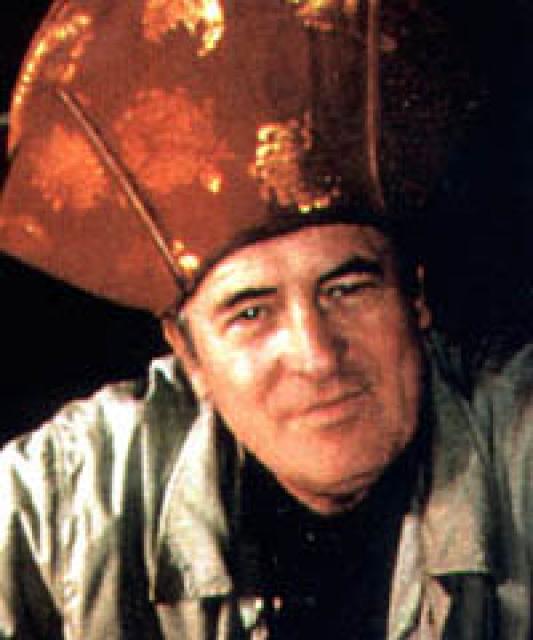
Bernardo Bertolucci received numerous awards throughout his career, including the Venice Film Festival's award for his contribution to cinema in 2007 and the Cannes Film Festival's award in 2011. Today, he is widely recognized as one of the greatest directors of the second half of the 20th century. His films have become classics, and his cinema ideas have become essential truths. Bertolucci's philosophical approach to filmmaking can be summed up in his own words: "Cinema is purification, and every new film is a love story with an actor."


