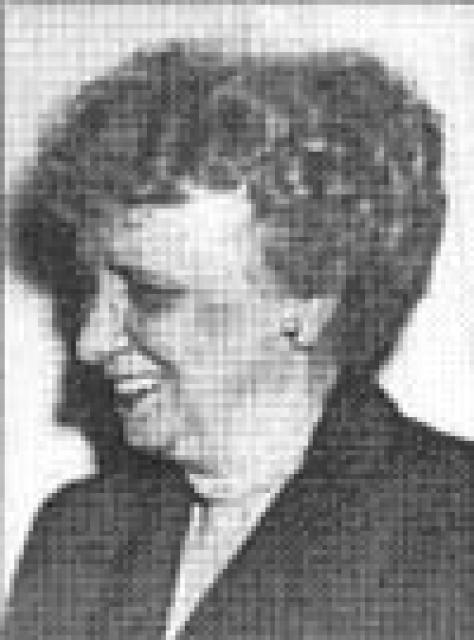
Bess Truman
 USA
USABiography of Bess Truman
Bess Truman, the wife of the 33rd President of the United States, Harry S. Truman, never publicly spoke about her political views. She once said, "The role of a wife in public life is to make sure her husband's hat is on straight." When asked about the qualities a First Lady should possess, she replied, "Good health and a sense of humor."
On April 12, 1942, after the sudden death of Franklin Delano Roosevelt, Harry S. Truman assumed the presidency. At the time, Bess was 60 years old, making her the oldest First Lady in American history. She did not enjoy the role of being the president's wife. She disliked reporters and refused to hold press conferences. Unlike Eleanor Roosevelt, she had no intention of visiting mines. Adam Clayton Powell, an African American congressman from New York, angrily referred to her as the "Last Lady of the Land" instead of the First Lady of America. Powell felt offended because Bess Truman had invited representatives of the Daughters of the American Revolution, who had denied his wife, pianist Hazel Scott, a concert hall. Bess sincerely regretted this, and President Truman believed that after such a scandal, Bess should not host these women in the White House. Claire Booth Luce, a Republican member of the House of Representatives, called the president's wife a "near-First Lady." After her husband's victory in the 1948 election, Bess replied, "Maybe even Claire Booth will consider me a real First Lady now?" In President Truman's opinion, both Powell and Luce had insulted his wife, and he did not invite either of them to the White House during his presidency.
Despite her reluctance to be in the public eye, Bess was not a bad hostess of the White House. This shy, modest woman preferred a family atmosphere. In terms of intellect and talent, she certainly paled in comparison to her predecessor, Eleanor Roosevelt. Journalists complained that it was too difficult to write anything interesting about her. The Newsweek magazine wrote in 1946, "Mrs. Truman has spent nine months in the White House and is still unknown in Washington. No one recognized her when she shopped for Christmas in the capital's stores."
Bess Truman always lived in her husband's shadow, whether he was a senator, vice president, or president of the United States. Her favorite response to journalists' questions was, "No comment." One journalist asked her what dress the president's wife would wear to an upcoming celebration. Bess remarked to her secretary, "Tell her it's none of her business." When interacting with reporters, Bess followed a simple principle: "Smile and say nothing." However, she still had to attend numerous dinners, receptions, concerts, and funerals. From April 1945 to January 1953, she attended 640 events, averaging about 90 events per year. While this may not seem like an impressive number compared to the activities of other first ladies, she considered her duty as a wife and mother to be her top priority.
Bess Truman was born on February 13, 1885, in Independence, Missouri. Her parents, David Wallace and Madge Gates Wallace, had four children. Her grandfather was a flour miller and one of the wealthiest men in their area.
Harry and Bess Truman first met at Sunday school in 1890 when he was six years old and she was a "little five-year-old girl with golden curls," as he later recalled. "She charmed me from the first moment, and still does." From then on, Harry carried Bess's textbooks and even composed a piano concerto for her. Later, he remembered, "In the sixth and seventh grades, she sat next to me and was the most beautiful, most beloved person in the world." Bess was indeed a beautiful, athletic girl who excelled in sports, playing tennis, baseball, and riding horses. She loved socializing and being surrounded by admirers. Harry, nearsighted, weak, and shy, had no interest in sports and tried to avoid people. He had very little chance of winning such a girl's heart. In 1901, both of them graduated from school, and their paths diverged. Harry went to Kansas City in search of work, trying out various professions.
One day in 1906, he traveled over thirty kilometers to visit his Aunt Ella Noland, who asked him to return a pie plate to Bess's mother. Harry was gone for a long time and returned very excited. He had met Bess and had a long, pleasant conversation with her. After that, they began to meet more often and write letters to each other. Their correspondence lasted for over ten years. Bess's mother made it clear that she did not want Harry to become her son-in-law. Harry tried his best to make as much money as possible to appear as a successful man deserving of Bess's hand and her mother's approval.
In 1911, David Wallace took his own life. Bess was deeply affected by this tragedy but never mentioned it. When her daughter Margaret learned about her grandfather's suicide many years later and asked her father about it, he exclaimed, "Never dare to ask your mother about it!" Margaret concluded that her mother had been deeply affected by her grandfather's death and needed the support of someone she could confide in.
As the eldest daughter in the family, 18-year-old Bess helped her mother with household chores. Harry worked on a farm. In 1914, he bought a Stafford pickup truck and drove to visit Bess, hoping that the car would make an impression on her. However, she was not in a hurry to get married. It seemed she was waiting for a more suitable candidate.
In 1911, Harry had already proposed to her in a letter, and although he received a rejection, he did not give up. Gradually, he began to earn Bess's respect. She initially accepted his photograph, then started inviting him to her home on Sundays. Sometimes, Bess would visit him on his farm in Grandview, where they could take walks and go fishing. In November 1913, she gave him her photograph and assured him that if she ever got married, it would only be to him.
Despite their "unofficial engagement," he was not entirely sure of Bess's intentions, although he wrote quite confidently in one of his letters, "What a pleasure it is to be engaged to some farmer conceited enough to become the governor of Montana and President of the United States."
When their financial situation improved, in 1919, he once again proposed to Bess, and this time, she accepted. Bess asked her mother to officially announce the engagement.
Their engagement took place before the United States entered World War I. Shortly after, Harry was drafted into the army and sent to the French front. He took a photo of Bess and six pairs of glasses with him because his eyesight was very poor. On the photo, she wrote, "May this photograph help you return safely from France. Bess." Throughout his life, Truman was convinced that Bess had not wanted to marry him until after the war, fearing she would become a widow.
Harry returned home as a major. Nothing could stop them from getting married now. They married on June 28, 1919, the day the Treaty of Versailles was signed, at the Holy Trinity Episcopal Church in Independence. They spent a short honeymoon in Chicago, Detroit, and Port Huron. Coming from a small town, the big cities left an indelible impression on the young couple. After their return, they settled on North Delaware Street, 219, in Independence, in a 17-room house that had been Bess's home since 1904 and remained her only home for the rest of her life.
Until their marriage, Harry and Bess had known each other for 29 years. He was now 35 years old, and she was 34. It remains somewhat unclear why they kept postponing their wedding, but both believed it was their private affair and avoided discussing it.
In 1919, Truman, along with a friend, opened a men's haberdashery store in Kansas City. Bess helped her husband by managing the books, doing advertising, but the business did not do well, and they had to close it in 1922.
On February 17, 1924, 39-year-old Bess gave birth to a daughter. They named her Margaret, but she went by Mary. She inherited her father's musical abilities and became a singer, although she did not receive much acclaim from critics.
Truman became interested in politics and slowly climbed the political ladder. In 1934, he ran for the position of senator from Missouri in the Washington elections. Bess participated in the election campaign, standing by his side on the platform, but she never spoke publicly, feeling nervous in front of large crowds.
In January 1935, Truman became a senator, and they moved to Washington, where they lived for 18 years until January 1953. Bess did not like the city, considering it "cold and eastern." Her five-room apartment in Tilden Gardens always seemed too small compared to the big house they had left in Independence.
The senator's annual income was $10,000, which was not enough for their family, so Truman officially appointed his wife as his secretary with a salary of $4,500 per year. He was accused of nepotism, but Truman firmly rejected these accusations, stating that Bess deserved the salary she received. She helped Truman prepare speeches, handled his correspondence, and carried out other tasks necessary for his work as a senator. Truman often consulted with his wife on political matters. When he became president, he admitted that he sought her advice when making important decisions.
In 1944, the Democratic Party nominated Truman for the vice presidency. He initially declined, stating firmly that he would not accept the position.


