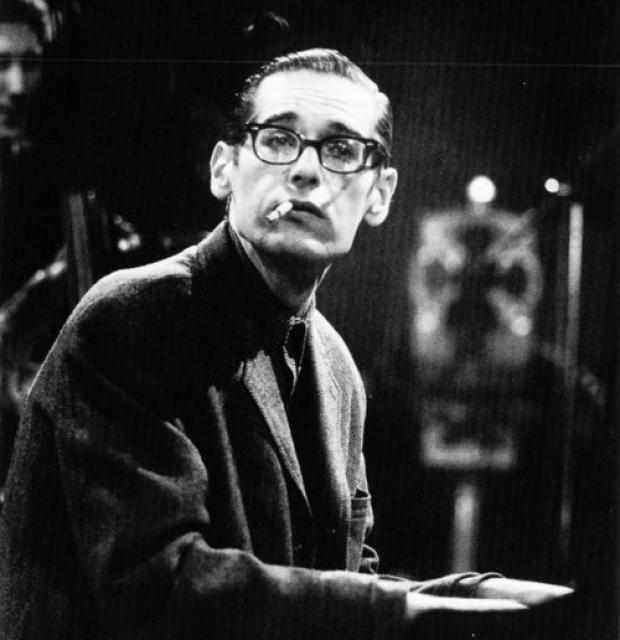
Bill Evans
 USA
USABiography of Bill Evans
Bill Evans, a pianist and band leader, was primarily known for his post-bop and cool jazz style. He was born and raised in New Jersey and was sent to Southwestern Louisiana University as a young man, where he studied music theory and flute. In 1950, Evans received a degree as a pianist and began touring with the Herbie Fields band, but soon joined the Fifth Army Band near Chicago. After three years of service and playing in the band, Bill Evans moved to New York, where he started playing with Tony Scott's quartet while continuing his studies at Mannes College. At college, Evans met composer George Russell and became acquainted with his modal jazz theories. In 1956, he recorded his first album as a leader, which showed a clear influence from the renowned Bud Powell.
In the spring of 1958, Evans embarked on an eight-month tour with the Miles Davis Sextet, where he experienced a significant influence from the young leader. However, in the fall of the same year, he left the group, exhausted by his desire to form his own band. The fame that came with the Miles Davis album "Blue in Green" went primarily to the leader, rather than the pianist, although Evans contributed numerous ideas to the mood, structure, and improvisation. This album is now credited as a collaboration, but there is no doubt that Evans played his best parts on it. He returned to the spotlight as a leader in December 1958 with the album "Everybody Digs Bill Evans." The first work of his trio, featuring the remarkable young bassist Scott LaFaro and drummer Paul Motian, greatly contributed to the success of the release. With this group, Evans became a star.
Miles Davis began negotiating a recording together with the full trio lineup, but in June 1961, just ten days after starting a musical session at the Village Vanguard, LaFaro tragically died in a car accident. Evans was so devastated by the news that he withdrew from music for almost a year. After this difficult period, Evans enlisted bassist Chuck Israels to join his group and began recording duets with guitarist Jim Hall, as well as collaborating with a swing quintet and trumpeter Freddie Hubbard. In 1962, under the influence of producer Creed Taylor, Evans started working with different formats, such as Gary McFarland's big band, arranging for Claus Ogerman, performing with Stan Getz, and reuniting with Jim Hall. The most notable experiment was the album "Conversations With Myself," where the second and third piano parts were overdubbed onto the first. Influenced by the emerging jazz-rock movement, Evans also tried playing the electric piano with Harold Rhodes but quickly grew tired of it.
Among his followers, famous names like Herbie Hancock, Keith Jarrett, Chick Corea, and Brad Mehldau can be mentioned. Drawing heavily from the impressionism of Claude Debussy and Maurice Ravel, Evans infused jazz with inner concentration, relaxation, lyricism, and classical European sensibility. His performances inspired not only young conservatory students but also classical pianists such as Jean-Yves Thibaudet. Wearing glasses, speaking softly, and being easily hurt, Evans was not suited for the harsh and disorderly music business. In an attempt to shield himself from the outside world, he turned to drug use, first with heroin and then cocaine, which undoubtedly shortened his life. However, in all his interviews, Bill maintained complete control, knowing exactly what he wanted from his art. Colleagues said he always had a good sense of humor.
Today, Evans is almost impervious to criticism, although there were times when he was unable to perform and was mocked for his connection to "black" music. While his health, severely damaged by his addiction to cocaine, left much to be desired, his last recordings demonstrated an astonishing vitality. Even "The Last Waltz," recorded just a week before the musician's death from a worsening bleeding ulcer and bronchitis, did not indicate any physical weakness on the part of its creator. After Evans' death, a stream of releases, including previously unreleased material from commercial and private sources, further increased the public's interest in the great pianist.


