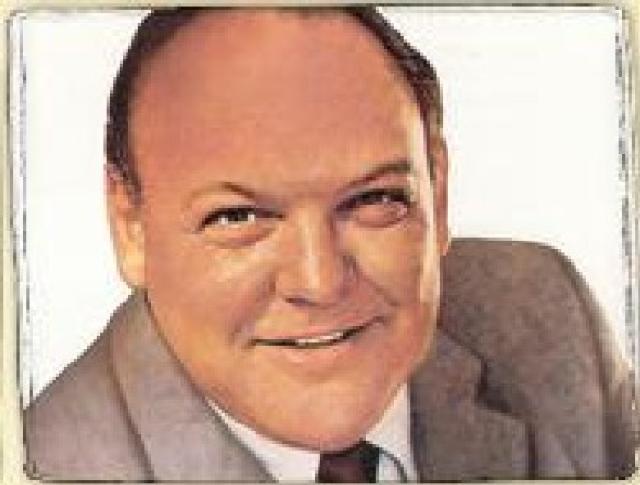
Billy May
 USA
USABiography of Billy May
Billy May (William E. 'Billy' May) was an American composer, arranger, and trumpeter. He was born on November 10, 1916, in Pittsburgh, Pennsylvania. May began playing tuba in his school orchestra and became interested in arranging and conducting at a young age. At the age of 17, he performed with the Polish-American orchestra of Gene Olsen.

May played with local ensembles until he heard Charlie Barnet's orchestra on the radio in Pittsburgh. In the summer of 1938, an unknown May approached Barnet and asked if he could write an arrangement for the orchestra. From 1938 to 1942, May played trumpet and wrote arrangements for Charlie Barnet's big band. His arrangement of Ray Noble's composition 'Cherokee' became one of the major hits of the swing era.
In 1940, May joined Glenn Miller's famous orchestra and worked as an arranger with Miller and Les Brown until 1942, when he was recruited as a staff arranger first for NBC radio network and then for Capitol Records, one of the largest record labels in the United States. From 1951 to 1954, May led his own orchestra and made arrangements for the stars of the era as well as participating in many children's projects for Capitol Records.
May also collaborated with American comedian Stan Freberg. He used his skills to write music that closely resembled the original songs, helping Freberg create parodies of popular hits of the time. May once invited some of the best jazz musicians from Hollywood to create a parody of Lawrence Welk, a popular orchestra leader, in Freberg's show. They perfectly recreated the musical accompaniment while Freberg and the vocal group performed the parody. Welk reportedly did not appreciate the parody because he could not achieve the same sound from his own orchestra without Billy May.
In 1959, Billy May won a prestigious Grammy Award in the category of 'Best Performance by an Orchestra'. After Frank Sinatra left Capitol Records and started his own label, May continued to work with him for about 30 years.
May's arrangements were characterized by fast tempo and complex brass sections, although he also wrote beautiful slow sections for strings. Examples of his work include Cole's 'These Foolish Things' and Sinatra's 'April in Paris'. May passed away on January 22, 2004, at the age of 87, due to heart failure at his home in San Juan Capistrano, California. In 1988, he was posthumously honored with induction into the Big Band and Jazz Hall of Fame.


