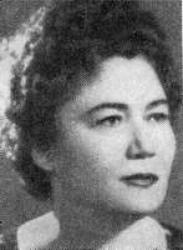
Birjan Kojagulov
 Kazakhstan
- Biography of Birzhan Kozhagulov
- The Song "Zhambota"
- The Inspiration of the Kazakh Steppe
- The Competition with Sary
- The Social and Civil Themes
- The Last Years
- The Legacy
Biography of Birzhan Kozhagulov
Birzhan Kozhagulov was an outstanding Kazakh akyn, poet, and composer. He was born in 1831 in the Enbekshilder district of the Kokshetau region, in the village of Kozhagul. He passed away in 1894. During his early childhood, he lived with his uncle Kozhagul, hence his last name. From a young age, Birzhan was passionate about singing, and soon his strong, beautiful voice and brilliant improvisational talent made him a desired guest in every village, every yurt. Birzhan's fame spread throughout Kazakhstan, which determined his further life path. Birzhan came from a wealthy family, but despite the insistence of his relatives to pursue a "respectable" career, he chose the restless and unpredictable destiny of a professional singer.
The Song "Zhambota"
It is known that in the summer of 1865, the Omsk governor-general visited Kokshetau. The arrival of such a prominent guest naturally attracted a crowd of people. People from all corners of the vast Kokshetau district gathered: poets, musicians, wrestlers, horsemen, and simply curious individuals. During this celebration, Birzhan had to endure bitterness and humiliation. Filled with indignation, Birzhan expressed his angry protest and intense hatred towards arrogant and greedy rulers in the song "Zhambota."
"Hailing from the volost, Zhambota was born,
Accustomed to ranks and power.
His friend Aznabay in broad daylight
Sent to take away my dombra.
I, an akyn, did not give away my dombra,
Though the villain tried to snatch it away...
Zhambota! Where have you seen such a law,
That allows someone to beat a free man?..."
Birzhan's songs reflect the unyielding spirit, his protest, and struggle against lawlessness and violence. His verses are not abstract images or lyrical reflections but an immediate response to specific events expressed in poetic, trembling, and expressive form.
The Inspiration of the Kazakh Steppe
Traveling through the expanses of the Kazakh steppe, Birzhan visited all its corners, finding sources of poetic inspiration everywhere. Once, when he visited the Baya Aq-Tentek village and saw the daughter of Ajar, he dedicated a lyrical song to her called "Tentek." Another song, "Zhaimashuak," was born from a meeting with a girl named Aitbai. This encounter also gave birth to one of his best songs, "Aitbai," which fully reveals the inspired-poetic character of the singer. It is a musical characterization of the girl's sublime traits and, at the same time, a unique expression of love for the homeland. In its sound, one can feel the infinity of the steppe, filled with beauty and poetry.
The Competition with Sary
In his mature age, Birzhan met Sary, a well-known singer and poetess in Semirechye. According to A.K. Zhubanov's assumption, their poetic and musical competition took place in the town of Eshki-Ulmes. The poem "Aytys of Birzhan and Sary," which has come down to us, was supposedly created by Sary herself. It is now difficult to judge how this aytys went, what songs were sung, but from the description that has come to us, it is evident that Sary emphasized Birzhan's magnificent vocal mastery and his brilliant gift as an improviser. This competition further strengthened the singer's reputation.
The Social and Civil Themes
The social and civil theme finds its bright expression in the song "Birzhan-sal." Birzhan's passionate poetic nature, which found expression in his talented creativity, merged with the idea of being the "chosen one of the people."
I am Birzhan, son of Kozhagul.
I have not harmed anyone in this world,
I have not bowed my back, begged, or flattered,
Why does the poet face praise and ridicule?!
sings the song. In it, the singer rises to the understanding of his social role.
Birzhan's exploration of civil motifs was greatly influenced by his meeting with Abai Kunanbayev, which likely took place in the late 1880s. The acquaintance with the great poet and enlightener had a positive impact on Birzhan's creativity. The song "Birzhan-sal akyn" bears the imprint of the influence of Abai's song lyrics, as it sings of the poet's human dignity, his civic duty, and the tragic fate of the poor.
For a brave man, poverty is a wicked trap,
He will not want to live after losing his horse.
And if there is nothing to treat a friend with,
He will die of shame without even living a day.
Admiring Abai's poetry, Birzhan composed songs based on his verses. Presumably, during this time, Birzhan also had a meeting with the famous Kazakh singer Akan-Seri and interacted with many other prominent figures of folk art. He participated in aytys competitions on multiple occasions.
The Last Years
The last years of Birzhan's life were overshadowed by severe trials: with old age came poverty, which the singer bitterly and ironically commented on, and with poverty came illnesses and loneliness. While Birzhan endured need and old age with stoic calmness, even with irony, loneliness and misunderstanding were too heavy for him. The deaf wall of ill will caused him to become alienated and withdrawn. In the songs of his final years, Birzhan sought to express his yearning for the irrevocably lost youth and glory. All of this exceeded the boundaries of what was familiar to those around him, and Birzhan was declared mentally ill. He spent his last three years bound in his yurt and died in excruciating pain in 1894. Before his death, Birzhan composed songs "Asyl-Ahyk" and "Temirtas," dedicated to children.
The Legacy
The freedom-loving image of the great singer found its embodiment in the opera "Birzhan and Sara" by Mukan Tulebayev. Thanks to Tulebayev's opera, the dramatic fate of akyn Birzhan Kozhagulov, full of struggle against evil, vice, injustice, lives in the memory of the people.