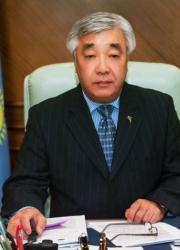
Bo Gu
 China
China- Early Life and Education
- Political Activism and Joining the Communist Party
- Moscow and the "28 Bolsheviks" Group
- Leadership Roles in the Communist Party
- Conflict with Mao Zedong and the Zunyi Conference
- Later Political Roles
Early Life and Education
Qin Bangxian, also known as Bo Gu, was born on 1907 in Wuxi, Jiangsu province, into a poor family. His father passed away when he was only nine years old. In school, Bo Gu developed a passion for reading ancient texts, which led him to adopt the name Bo Gu ("Study of Antiquity"). He later attended a vocational school in Suzhou, where he became the president of the student union in 1925.
Political Activism and Joining the Communist Party
During his time in Suzhou, Bo Gu actively opposed the Chinese warlords who oppressed several provinces. He joined the Communist Youth League and, in the fall of 1925, enrolled in the Sociology Department of Shanghai University. Here, he was influenced by prominent Communist Party leaders such as Qu Qiubai, Deng Zhongxia, and Li Dazhao. In the same year, Bo Gu joined the anti-imperialist "May 30th Movement" and subsequently the Communist Party of China.
Moscow and the "28 Bolsheviks" Group
In 1926, Bo Gu was sent to Moscow to study Marxism and Leninism at the Sun Yat-sen University, which was established by the Comintern for the education of Chinese revolutionaries. In Moscow, he met Wang Ming, who had arrived a year earlier. Together with other Chinese students such as Zhang Mintian, Wang Jiaxiang, and Yang Shangkun, Bo Gu formed the "28 Bolsheviks" group. This group advocated for a true Marxist approach and called for a change in direction for the Chinese revolution.
Leadership Roles in the Communist Party
Upon his return to China in May 1930, Bo Gu held leadership positions in the All-China Federation of Trade Unions and the Communist Youth League. He played an active role in opposing Li Lisan's line, which was criticized at the Sixth National Congress of the CPC in 1931. After Wang Ming's departure to Moscow for medical treatment, Bo Gu was elected as a member of the CPC Central Bureau and later as General Secretary of the Communist Party of China.
As General Secretary, Bo Gu implemented a proletariat, internationalist policy. However, he also made several "leftist" mistakes. As a result of the Kuomintang's repression, the CPC's forces in major Chinese cities suffered significant losses. In 1933, Bo Gu and other members of the Central Bureau, including Zhou Enlai, were forced to evacuate to Soviet territories, establishing a base in the Jiangxi Chinese Soviet Republic.
Conflict with Mao Zedong and the Zunyi Conference
In Jiangxi, tensions arose between Bo Gu, Zhou Enlai, the Comintern's military adviser Otto Braun (Li De), who were in charge of military leadership, and Mao Zedong, who was the chairman of the Soviet government. In 1934, after the Jiangxi Soviet was surrounded by Chiang Kai-shek's troops, the CPC leadership decided to evacuate to Yanan (the "Long March"). The heavy losses suffered by the Chinese Red Army during the Long March led to Bo Gu's decline and eventual resignation. This, in turn, contributed to the rise of Mao Zedong's authority within the army and political circles. At the Zunyi Conference in January 1935, Mao Zedong was elected as the head of the CPC Central Committee. Bo Gu was dismissed from the post of General Secretary in February but retained his membership in the Politburo.
Later Political Roles
As a representative of the CPC, Bo Gu worked with Zhou Enlai and Ye Jianying in investigating the Xi'an Incident in 1936. During the war against the Japanese invaders, Bo Gu played a significant role in organizing and strengthening the united anti-Japanese national front. In 1937, he was appointed as the head of the CPC Central Committee's Organization Department.