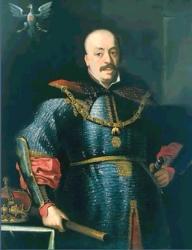
Boleslaw I
 Poland
- Biography of Bolesław I
- Unification of Poland
- Focus on Christianity
- Alliance with Otto III
- Conflicts with Germany
- Wars and Peace
Biography of Bolesław I
Bolesław I, also known as Bolesław the Brave, was a Polish prince and king who lived from 992 to 1025. He was the son of Mieszko I, the prince of Poland, and Dubravka, a Czech princess. Bolesław I belonged to the Piast dynasty, a ruling family in Poland.
Unification of Poland
Bolesław I continued his father's policy of unifying the Polish lands. After the death of Mieszko I, who divided his principality among his sons, Bolesław expelled his brothers and restored the unity of Poland. In 997, he managed to annex Kraków and the Kraków region, one of the wealthiest territories in Poland, which had previously been under Czech rule. During the same period, Poland regained control over Eastern Pomerania, which had attempted to gain independence after Mieszko I's death. In 999, Bolesław captured Moravia, and the following year, he acquired part of the territory of Slovakia. Under Bolesław I's reign, the borders of the Polish state expanded from the Elbe and Baltic Sea to the Carpathian Mountains and Hungary, and from Bohemia to Volhynia.
Focus on Christianity
Bolesław I placed great importance on Christianity and the organization of the Polish Church. He invited Adalbert, the Bishop of Prague, also known as Saint Wojciech in Poland, to evangelize the Prussians living to the northeast of the Polish principality in 997. However, the mission was unsuccessful, and Adalbert was killed and later canonized. Bolesław I purchased the relics of Saint Adalbert-Wojciech and ceremoniously transferred them to Gniezno. Saint Adalbert became the patron saint of Poland. Bolesław I also succeeded in establishing the Archdiocese of Gniezno in 1000, which was directly subordinate to the Pope. Additionally, bishoprics were founded in Wrocław, Kraków, and Kołobrzeg. The creation of a national church organization and Bolesław I's religious policies greatly enhanced Poland's prestige on the international stage.
Alliance with Otto III
In 1000, Bolesław I received a visit from Emperor Otto III in Gniezno. Otto III released Poland from its feudal obligations to the empire for Western Pomerania and bestowed upon the prince the title of "Brother and Partner of the Empire." The alliance between Poland, the Holy Roman Empire, and the papacy opened up broad opportunities for the prince. The emperor even requested the coronation of Bolesław I as the king of Poland in Rome. However, plans were disrupted by the death of Otto III in 1002. The crown was given to the Hungarian prince Stephen, and the new emperor, Henry II, pursued an anti-Polish policy.
Conflicts with Germany
Taking advantage of the death of his relative, the margrave of Meissen Ekkehard, and the rights of his wife, the daughter of the Meissen margrave Rikdag, Bolesław invaded the Meissen and Lusatian marches in eastern Germany in 1002, even capturing several points on the left bank of the Elbe. When Henry II arrived in Merseburg, where Saxon princes had gathered to pledge allegiance to the new king, Bolesław approached him with a request to recognize his control over these territories. The king rejected this proposal, and the margraviate of Meissen was given to Gunzelin, the son of the deceased margrave. Bolesław the Brave refused to evacuate the occupied territories and, on his way back, attacked German fortifications. In 1002, taking advantage of the expulsion of Prince Bolesław III from Bohemia, Bolesław the Brave invaded Bohemia, captured Prague, and declared himself the prince of Bohemia. When Henry II demanded his vassal oath (Bohemia was considered an imperial fief), Bolesław adamantly refused. At that time, the German king's position was very critical. A conspiracy of German nobles, in which his own brother Bruno participated, allied with the Polish prince against him. However, the conspiracy was soon suppressed, and Henry II, forming an anti-Polish alliance with the Lutici, moved his troops into Bohemia. Uprisings broke out in Prague and other cities. The Poles were forced to leave Bohemia in 1004, and a representative of the Přemyslid dynasty, Jaromír, was restored to the Bohemian throne, renewing his vassal oath to the German emperor.
Wars and Peace
In 1004, German forces, in alliance with the Czechs and the Lutici, expelled the Poles from the Meissen march. The following year, they launched a new campaign, invading Poland and reaching Poznań but were eventually stopped. Bolesław the Brave agreed to make peace in 1005, in which Poland renounced its claims to the Lusatian and Meissen regions and recognized the independence of Bohemia. Moravia remained under Polish control until 1021. This agreement, the details of which are not fully known, marked the end of the first phase of wars between the new German king and Poland. In 1007, a new war began. Emperor Henry II, who was stationed in Valenciennes at the time, did not have sufficient forces: only the Saxons were sent against the Poles, while the Lutici adopted a wait-and-see position, and the Havolanes even entered into negotiations with Bolesław the Brave. The Saxons suffered a defeat, and the Poles once again occupied the Meissen and Lusatian regions and devastated the Saxon Eastern March as far as Magdeburg in 1008. Germany formed an alliance with Hungary and attempted to regain the lost territories but was unsuccessful.
In 1010, the emperor launched a new campaign, starting with the devastation of the Eastern March. Crossing through Lusatia on the Oder River to Niemcza in Silesia, ailing Henry was forced to return without achieving anything. In order to consolidate forces against Poland, Henry II obliged the Saxon nobility to refrain from feuds for five years starting in 1012. New margraves were also appointed. However, the Saxons had no desire to wage war against Poland, which did not serve their own interests, especially in alliance with the pagan Lutici. This circumstance and Bolesław's desire to free himself for actions against the Kiev Prince Vladimir Sviatoslavich led to peaceful negotiations on Trinity in 1013 in Merseburg. As a result, Bolesław received Lusatia and the Milceni land as a German fief and accepted compensation as a vassal of the king. He promised to accompany Henry to Rome for the imperial coronation, and the king pledged military assistance in Bolesław's fight against Kiev. The daughter of the Count Palatine of Lotharingia, Ezzo of Lotharingia, entered into marriage with Bolesław's son Mieszko. According to the 1013 agreement, German knights followed Bolesław on an expedition to Rus, but he did not fulfill his promise to send his troops to Italy (1014). Due to Bolesław the Brave's resolute refusal to appear at the trial of German princes called by Henry II in Merseburg, the emperor confiscated the Meissen and Lusatian regions that belonged to the Polish prince, and in July 1015, he once again launched a campaign against him. The emperor crossed the Oder River near Kostrzyn and defeated a Polish detachment led by Bolesław's son Mieszko. However, neither the northern army, together with the Lutici under the command of Duke Bernhard of Saxony, which reached Küstrin, nor the southern army of Bohemians and Bavarians, which invaded Silesia, managed to join the emperor, so the rearguard of the army was completely defeated on its return. Chasing the disorderly retreating troops of Henry II, the Poles once again crossed the Elbe River and burned Meissen. After unsuccessful negotiations and the conclusion of an alliance with Yaroslav the Wise, which proved ineffective, the emperor advanced to Nimptsch in Silesia at the end of July 1017 but failed to capture it. Finally, the Saxon princes assisted the emperor in making peace with Bolesław in January 1018 in Bautzen. According to the Bautzen Peace Treaty in 1018, the emperor recognized Bolesław I's feudal rights over the Lusatian March (Lusatia) and Moravia, while Meissen was returned to the emperor. Bolesław married for the fourth time to Oda, the daughter of Ekkehard, the margrave of Meissen. This peace also provided Bolesław with an opportunity to launch a military campaign against Rus and place his son-in-law Sviatopolk on the Kiev throne. In 1018, German knights once again accompanied Bolesław in an expedition to the east. In 1018, Bolesław, called by his son-in-law Sviatopolk the Accursed and free on the western front after the Bautzen Peace Treaty, moved on Volhynia, defeated his brother and rival Yaroslav Vladimirovich (the Wise) on the Bug River, and captured Kiev. Instead of handing it over to Sviatopolk, Bolesław himself attempted to establish himself as its ruler. However, the Kievans, outraged by the atrocities committed by his troops, began to assault the Poles, and Bolesław had to hastily leave Kiev, depriving Sviatopolk of military aid. However, he retained control over the cities of Chernihiv. On April 18, 1025, Bolesław the Brave was crowned as the king of Poland by Polish bishops. This was intended to greatly enhance the prestige of the Polish monarch. However, Bolesław's almost continuous conquest wars led to Poland's complete isolation: the empire, Bohemia, Hungary, and Rus - all neighboring states - were fiercely hostile towards Poland. Contemporary chroniclers, even his opponents, unanimously characterized Bolesław as an intelligent, cunning, and skillful politician. The Russian chronicler states that Bolesław was "wise," and the Merseburg chronicler emphasizes his "cunning foxiness." In his youth, Bolesław became famous for his bravery in battles and earned the nickname "the Brave." His courage and endurance remained with him even in his later years when, being very corpulent, he could no longer mount a horse and personally lead troops into battle. The beginnings of Polish statehood laid by Bolesław survived the temporary anarchy after his death and proved to be long-lasting.