Krakus
 Poland
- Legendary Polish Prince and Founder of Kraków
- Family and Events
- Parallels and Influences
- Tomb and Commemoration
- Modern Depictions
- Kadlubek's Account
Legendary Polish Prince and Founder of Kraków
Background and LegendKrak, a legendary figure in Polish history, is believed to have lived in the 6th-7th centuries and is recognized as the founder of Kraków. According to the earliest written account by Wincenty Kadlubek, Krak was among the princes of the Poles who fought against the Gauls in Pannonia or Carinthia. Upon returning victorious, he was chosen as the prince, marking the beginning of the organization of the Polish state.
Family and Events
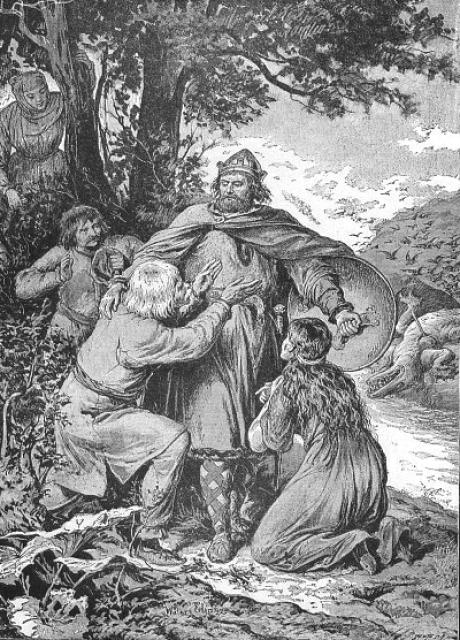
Krak is said to have had two sons (Krak II and Lech II) and a daughter. His sons faced the fearsome Wawel Dragon and, in an act of jealousy, Lech II murdered his brother. Another legend attributes the slaying of the dragon to Krak himself. His daughter, Wanda, became a heroine in a separate tale.
Parallels and Influences
The legend of Krak bears similarities to the Czech legend of Krok, while the dragon-slaying motif is likely borrowed from the legend of St. George. Despite being considered the earliest Polish legend, it incorporates elements from the 7th and 8th centuries.
Tomb and Commemoration
Upon Krak's death, a high mound known as Krak's Mound was raised for his burial. Legend has it that the residents of Kraków filled the mound with earth using their sleeves, giving rise to the Rękawka festival. The mound itself became known as Kraków.
Modern Depictions
The figure of Prince Krak resurfaced in the 20th century through the works of Stanisław Pagaczewski. Krak is sometimes referred to as the Victorious.
Kadlubek's Account
Kadlubek's legend begins with events following the war with the Romans, where he mentions that the Proto-Poles elected Krak as their prince. He briefly describes the conflict with the Gauls, a neighboring tribe who migrated to Pannonia, challenging the Poles' presence in the Slavic-populated region. This situation threatened to divide the state into tribal entities. To prevent the collapse of the state, Krak, upon returning from battle in Carinthia, gathered an assembly (wiec) and gained the support of the people. Kadlubek attributes the following words to him: "As the world is without the sun, so is the country without a king."