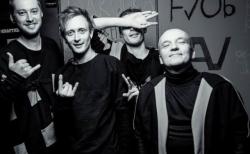
Bora Chorba
 Serbia
- Early Life and Artistic Pursuits
- Musical Beginnings
- Formation of Riblja Čorba
- Censorship and Controversy
- Later Career and Legacy
- Personal Life
- Death
Early Life and Artistic Pursuits
Born on November 1, 1952, in Čačak, Serbia, Bora Đorđević inherited his musical and artistic talents from his parents. From a young age, he excelled in singing and drawing, winning recognition for his collages at an exhibition in Novi Sad. Despite aspiring to study at an art school in Zagreb, his parents disapproved.
At 13, Đorđević formed his first band, Hermelini, with friends. They played covers of popular radio hits on homemade instruments. However, his involvement in adolescent mischief, including petty theft, earned him the status of a "minor delinquent." After being arrested, he faced probation and was forced to transfer to a high school in Belgrade.
Musical Beginnings
Determined to distance himself from his past, Đorđević dedicated himself to his studies but was hindered by his reputation. Despite his academic efforts, he received average grades. Following high school, he landed a role in "Jesus Christ - Superstar" at the Atelje 212 theater, but failed to gain admission to drama school. He later enrolled in law school but dropped out in his second year.
In the early 1970s, Đorđević formed the band Zajedno, achieving moderate success with their first single. However, he left the group in 1974 and founded Suncokret, a folk-rock band that he considered his first serious musical endeavor. Internal conflicts over his controversial song "Lutka sa naslovne strane" eventually led to the band's dissolution.
Formation of Riblja Čorba
After a brief stint with Ranid Mraz, Đorđević collaborated with members of the SOS band. These sessions resulted in unreleased recordings that remain lost to this day. On September 15, 1978, Đorđević and his collaborators established Riblja Čorba, naming it after a traditional Serbian stew. The band's debut song, "Lutka sa naslovne strane," would become a defining anthem for Đorđević's rebellious persona.
Censorship and Controversy
Đorđević's outspoken and politically charged lyrics earned him both admiration and criticism. His songs "Na Zapadu ništa novo" and "Besni psi" sparked controversy and led to concert bans. His poem "Crni Mercedes," alluding to Marshal Tito's behavior, landed him in two criminal trials, both of which resulted in his acquittal.
Despite his support for Serbian troops in the Yugoslav wars, Đorđević remained a vocal opponent of Slobodan Milošević's regime. His album "Njihovi Dani," released under his own name, lampooned the regime and became an anthem for anti-Milošević protests.
Later Career and Legacy
Following Milošević's downfall, Đorđević joined the Democratic Party of Serbia and briefly served as an adviser to the Minister of Culture. He also contributed as a columnist to various publications and published eight books of poetry, prose, and drawings. As a member of the Serbian Journalists' Association and Writers' Association, he wrote over 300 songs and poems.
Personal Life
Đorđević was married twice. His first marriage to Dragana resulted in a son, Boris, and an adopted daughter, Tamara. After their divorce in 2007, Dragana committed suicide a month later. In 2009, Đorđević married Aleksandra Brković, who was 28 years his junior.
Death
In August 2024, Đorđević was hospitalized with pneumonia and passed away on September 4, 2024, at the age of 71.