Boris Anrep
 Great Britain
- Boris Anrep: A Biography
- Education and Career
- Artistic Achievements
- Association with the Bloomsbury Group
- Later Life and Legacy
Boris Anrep: A Biography
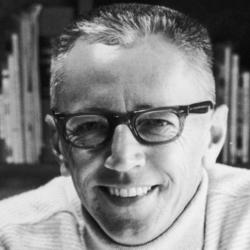
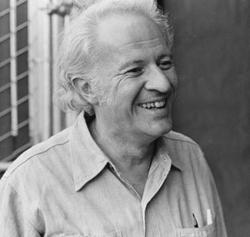
Boris Anrep was a Russian monumental artist and writer of the Silver Age. He spent the majority of his life in Great Britain. Born into a family with Swedish, German, Estonian, and Russian aristocratic roots, his ancestors served in the French, Prussian, and Russian state and military service. His father, Vasily Konstantinovich Anrep, was a physiologist, respected forensic expert, professor of forensic medicine, and held positions in the Ministry of Internal Affairs and the Ministry of Education. In 1907, he was elected as a deputy of the Third State Duma.
Education and Career
Boris Anrep studied at the Kharkov School from 1899 to 1901, where he met Nikolay Nedobrovo. During the summer of 1899, he spent time in England, studying the English language. In 1905, he graduated from the Imperial School of Law and then enrolled in the fourth year at St. Petersburg University. At the same time, he studied painting under D.S. Stellecky. In 1908, he dropped out of university and dedicated himself entirely to painting. He traveled to Italy, studied at the Académie Julian in Paris, and attended the Grand Chaumière Academy. From 1910 to 1911, he studied at the Edinburgh College of Art. Anrep had a deep interest in Byzantine mosaic, and most of his later works revolved around mosaic art. During World War I, he fought in Galicia. In 1916, he traveled to England on military assignment and, after a brief return to Russia, decided to stay after the February Revolution. He was married twice, first to Junia Khitrovo (1908-1914) and then to Helen Maitland (1918-1926).
Artistic Achievements
Anrep held his first solo exhibition in London in 1913. He later worked on colored mosaics for the Royal Military Academy at Sandhurst (1921), the Tate Gallery (1923), the National Gallery in London (1928-1952, four panels), Westminster Abbey, the Bank of England, and the Christ the King Cathedral in Mullingar, Ireland (1933-1939, especially the panel of Saint Anne). His mosaic panel "Compassion" (1952), dedicated to the victims of the Siege of Leningrad, features a figure of Anna Akhmatova being blessed by an angel. Anrep became acquainted with Anna Akhmatova in 1914 through Nikolay Nedobrovo. They frequently met before Anrep's departure to Great Britain. Akhmatova dedicated more than thirty poems to Anrep, including "Sometimes, I Remain Silent in the Morning," "From Your Memory, I Extract This Day," "Like an Angel, Stirring the Water," "The Sky Sows a Long Rain," "When in the Darkest Capital," "Your Voice Was..." and "You Are a Renegade..." He also wrote poems to her.
Association with the Bloomsbury Group
In Great Britain, Anrep became close to the Bloomsbury Group, particularly artists Augustus John and Henry Lamb. In 1912, together with art critics Roger Fry and Clive Bell, he organized a large-scale exhibition of post-impressionist painting, overseeing the Russian section which included works by M. Larionov, N. Goncharova, N. Roerich, K. Petrov-Vodkin, Saryan, and Churlienis. Virginia Woolf mentions Anrep several times in her diaries, and he portrayed her in male attire in a mosaic at the home of artist Ethel Sands in Chelsea in 1920. He had a romantic relationship with Woolf's friend, writer and patron Ottoline Morrell, who left several photographic portraits of him. Anrep served as the prototype for the artist Gompo in Aldous Huxley's first novel, "Crome Yellow" (1921), where many members of the Bloomsbury Group are satirically depicted. His mosaic works were featured in an article by R. Fry published in 1923 in the Burlington Magazine, which he edited.
Later Life and Legacy
Boris Anrep is portrayed by Pyotr Velyaminov in the biographical film "Moon at Zenith" (2007) directed by Dmitry Tomashpolsky. Anatoly Shvedersky plays Anrep in the biographical film "The Tatar Princess" (2008) directed by Irina Kvirikadze. Anrep's artistic legacy continues to be celebrated, particularly for his contributions to mosaic art.