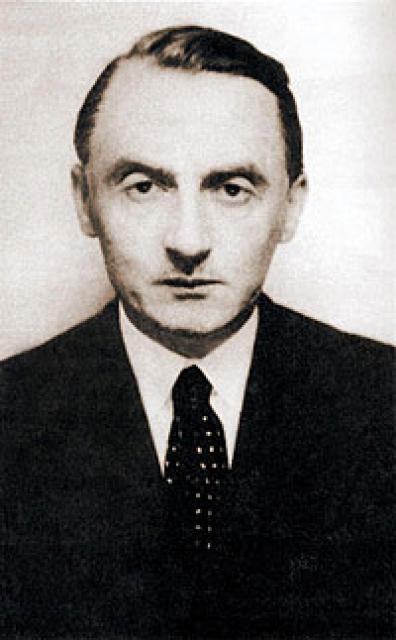
Boris Bozhnev
 Russia
- Boris Bozhnev: A Russian Poet of Obscurity and Brilliance
- Early Years
- A Temperamental Spirit
- Censured and Praised
- A Quest for Nonexistence
- Minimalism and Generosity
- A Private Sanctuary
- A Legacy in Verse
- Recognition and Redemption
Boris Bozhnev: A Russian Poet of Obscurity and Brilliance
Hidden LegacyBoris Bozhnev, a name once known only to a select few, emerged from obscurity through the posthumous publication of his work thanks to the efforts of Lazare Fleishman, an archaeologist of Russian poetry. His life, shrouded in mystery, has gradually been pieced together from fragments of information and the few tangible evidence left behind.
Early Years
Bozhnev was born into a provincial family in Russia, but the family moved to Saint Petersburg when he was just a year old. His father passed away shortly after their arrival, and his mother married Boris Gershun, a cousin of the prominent socialist Grigory Gershuni.
As a young man, Bozhnev pursued music, but his plans were derailed by the outbreak of the Civil War. Sent to Paris to continue his studies, he found himself working as a music copyist. It was during this time that he began to write poetry, using the musical notation as a unique and evocative medium.
A Temperamental Spirit
Bozhnev's character was marked by a peculiar duality. He had an uncanny ability to form literary and artistic associations, only to abandon them abruptly. He dabbled in various activities, from collecting postcards to painting to experimenting with film.
In his poetry, he favored an archaic form amidst the radical changes in poetic expression, yet infused his lyrical patterns with the grotesque imagery of refuse and urban decay. His Pushkin-inspired rhythms whispered softly, but they carried the scent of Baudelaire's flowers of evil.
Censured and Praised
Bozhnev's unconventional and provocative work met with mixed reactions. The conservative establishment of the Russian émigré community in Paris found his poetry repugnant, accusing him of literary vagrancy. However, other voices emerged in his defense, recognizing the profound authenticity of his vision.
A Quest for Nonexistence
Bozhnev's first collection, "The Struggle for Nonexistence," encapsulated his enigmatic self-definition. He sought not to belong but to exist as a solitary entity. His poetry was a reflection of this struggle, a rejection of the herd mentality.
Minimalism and Generosity
Despite his reputation as a minimalist, Bozhnev displayed a profound appreciation for the small and overlooked. His poetry was as much about the scarcity of life as it was about the moments of abundance. He believed in the transformative power of memory and the importance of conserving the treasures of one's experience.
A Private Sanctuary
While Bozhnev's life was marked by periods of seclusion and withdrawal, he found solace and companionship in his marriage to Ella Kaminer. Together, they lived in the small town of Clamart near Paris, where they met with other Russian émigré intellectuals. Yet, even in this intimate setting, Bozhnev's enigmatic nature remained. He kept his Soviet passport until the end of his days, a testament to his private and complex world.
A Legacy in Verse
Bozhnev's poetry, despite its limited circulation, has left an enduring mark on Russian literature. His exploration of the margins of existence, the juxtaposition of beauty and decay, and his uncompromising search for authenticity continue to resonate with readers today.
Recognition and Redemption
Vladimir Nabokov, one of the most acerbic critics of Russian émigré literature, praised Bozhnev's "thought, music, and wholeness" in his second collection, "The Fountain." Bozhnev's long-neglected work has found a wider audience in recent years, vindicating the early recognition of those who understood his genius.