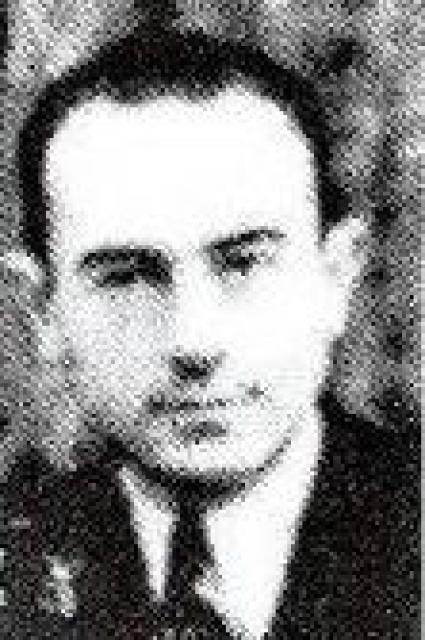
Boris Golban
 France
- Early Life and Communist Underground Activity
- International Brigade and French Exile
- Partisan Leader in Nazi-Occupied France
- Founding the Immigrant Battalion
- Dismissal and Legacy
- Post-War Years
Early Life and Communist Underground Activity
Born in the Podolsk Governorate in 1908 to a Jewish family, Boris Brukhman's life took a turbulent turn in 1918 when his family fled the Ukrainian pogroms to the Romanian province of Bessarabia. There, he joined the communist underground, adopting the pseudonym "Boris Golban."
International Brigade and French Exile
Golban's political activism continued in the Spanish Civil War, where he served in an international brigade. In 1938, he settled in France, joining the Foreign Legion and later the Volunteer Foreign Regiment (Régiment de Volontaires Étrangers).
Partisan Leader in Nazi-Occupied France
After the fall of France in 1940, Golban was captured by the Germans but managed to escape with the aid of a religious network organized by his sister, Hélène. He quickly joined a partisan unit and rose through the ranks due to his bravery and leadership skills.
Founding the Immigrant Battalion
In March 1942, Golban formed and commanded the immigrant battalion known as the "Battalion Liberté" within the French partisans. The battalion, composed of various ethnic groups, carried out sabotage and attacks against German forces.
Dismissal and Legacy
Golban, known by the aliases "Roger" and "Olivier," led the battalion until August 1943. He was later dismissed due to his disobedience of orders. His group's activities culminated in the infamous "Manouchian Group," whose members were executed by the Nazis.
Post-War Years
Golban continued fighting until the liberation of France and later served as a commander in the French army. In 1946, he returned to Romania, where he joined the Romanian army. He was dismissed in the 1960s during a purge initiated by Nicolae Ceaușescu.


