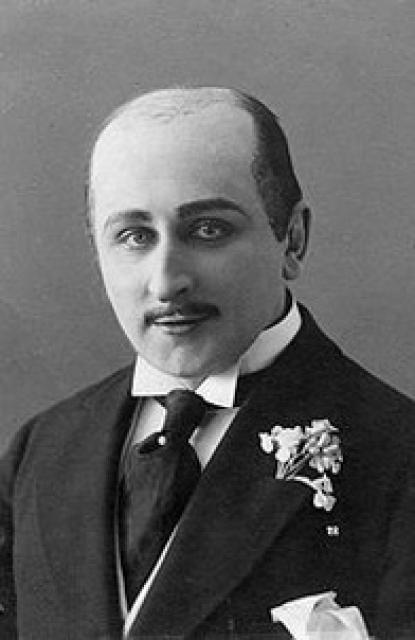
Boris Gorin-Goryainov
- Early Life and Education
- Theatre Career
- Alexandrinsky Theatre
- Versatility and Range
- Stage Directing and Cinema
- Literary Contributions
- World War II and Legacy
Early Life and Education
Boris Anatolevich Gorin-Goryainov was born in Saint Petersburg, Russia, into a family of actors. His father, A. M. Gorin-Goryainov, was a renowned performer at the Alexandrinsky Theatre.
Theatre Career
Gorin-Goryainov's acting career commenced in 1901. He performed on the stages of the Gatchina and Vasileostrovsky Theatres. In 1904, he graduated from the law faculty of the University of Saint Petersburg and joined the troupe of M. M. Boroday in Kiev.
After returning to Saint Petersburg, Gorin-Goryainov acted at L. B. Yavorskaya's New Theatre. In 1908, he was invited to join the prestigious Moscow Korsh Theatre, where he remained until 1911.
Alexandrinsky Theatre
From 1911 until his demise, Gorin-Goryainov became an integral part of the Alexandrinsky Theatre. He delivered memorable performances in plays such as "The Inspector General," "The Marriage of Figaro," and "Pygmalion."
Versatility and Range
Gorin-Goryainov possessed an exceptional range, portraying characters of diverse ages and temperaments. Notably, in the early 1920s, he simultaneously played the roles of Krutitsky in "There Was No Penny, But Suddenly an Altyn," Fadinar in "The Straw Hat," Mitrofan in "The Minor," and both Baron and Vaska Pepel in "The Lower Depths."
Stage Directing and Cinema
In 1933, Gorin-Goryainov ventured into stage directing, collaborating with B. Sushkaevich on "Don Quixote" and with V. Dudin on "Someone Else's Child." Additionally, he appeared in several films, including "The Defense of Sevastopol" in 1911.
Literary Contributions
Beyond his stage and screen work, Gorin-Goryainov was also an author. He penned several autobiographical books and the novel "Fyodor Volkov," exploring the life of the renowned Russian actor.
World War II and Legacy
During the Great Patriotic War, Gorin-Goryainov refused evacuation to Новосибирsk, opting to stay in besieged Leningrad. He succumbed to an illness in 1944, leaving behind an enduring legacy as one of Russia's most celebrated actors.