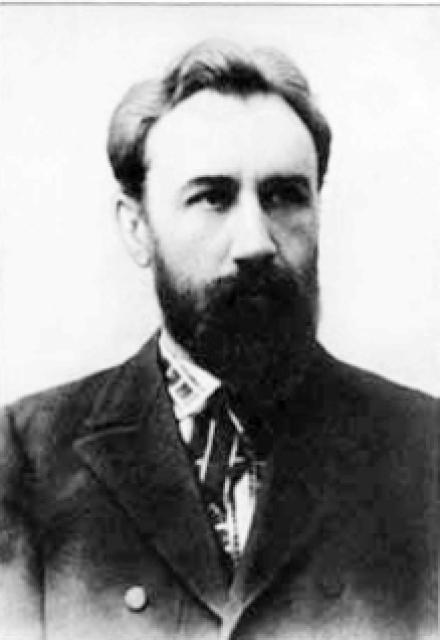
Boris Grinchenko
 Ukraine
- Biography of Boris Hryshchenko
- Early Life and Career
- Contributions to Ukrainian Language and Culture
- Literary Works
- Dramatic Works
- Translation Work
- Contributions to Ukrainian Heritage
- Legacy
Biography of Boris Hryshchenko
Boris Dmitrievich Hryshchenko, also known by his pen names Vasyl Chaichenko, Iv. Perekatipole, and others, was a renowned Ukrainian writer, scholar, translator, public and political figure. He was born in 1863 and passed away in 1910.
Early Life and Career
Boris Hryshchenko worked as a popular teacher in the Sumy district and later served in the local government in Chernihiv and Kyiv. In Chernihiv, from 1895 to 1899, he edited "Ethnographic Materials," a valuable collection on the ethnography of Little Russia, particularly songs and folk tales. He also published "Literature of Ukrainian Folklore 1777 - 1900" in 1901, which was highly regarded.
Contributions to Ukrainian Language and Culture
As a knowledgeable scholar of the Ukrainian language, Hryshchenko edited the "Russian-Ukrainian Dictionary" by Umanets. He was awarded the Kostomarov Prize for his work on the Ukrainian language dictionary, which was published in four volumes in 1907.
Literary Works
Hryshchenko's stories and tales were published in Galician editions such as "Zora," "Literary-Scientific Herald," "Kiev Antiquity," and in the third volume of "Vika." His works, including "Works of Vasyl Chaichenko" (Lviv, 1891) and "Opovidannia" (Kyiv, 1899), were published separately. A collection of Hryshchenko's writings was published in Kyiv.
In his stories, Hryshchenko depicted the plight of impoverished peasants. He demonstrated a close familiarity with folk customs and literary art, although his works lacked vivid colors and internal strength. The language in his writings was smooth, simple, and clean. He also wrote numerous poems in the Little Russian language, showcasing his poetic talent. The best of these poems were republished in the first volume of "Vika" (Kyiv, 1902).
Dramatic Works
In 1902, Hryshchenko's "Dramas and Comedies" were published in Chernihiv, consisting of four dramas: "Bright Dawns," "Step Horizon," "Amidst the Storm," and "Arsen Yakorenko," as well as one comedy titled "Nakhmarylo." While these works focused on ideas rather than artistic truth and realism, "Arsen Yakorenko" was considered his best play and was suitable for popular stage performances.
Translation Work
Hryshchenko also translated the poems of Schiller, including "William Tell" and "Mary Stuart," as well as several poems by Goethe, Heine, and other poets. He also compiled articles on Ivan Kotlyarevsky, Gutenberg, Garfield, Grebenka, and Hryhoriy Kvityka for popular and children's reading.
Contributions to Ukrainian Heritage
Hryshchenko compiled a collection of Ukrainian folk tales in 1910 and published a reference book, "Catalog of the Museum of Ukrainian Antiquities V.V. Tarnovsky," in 1900. He played a significant role in the history of the Ukrainian national revival as a publicist, writer, scholar, and a man deeply devoted to his cause and high ideals.
Legacy
Many articles have been written about Hryshchenko in Little Russian journals and newspapers, particularly in "Rada." His life and memories are detailed in Efremov's autobiography "At the Grave of Hryshchenko." N. Sumtsov also contributed to his biography.