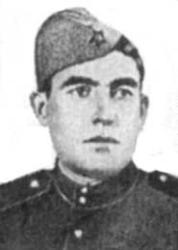
Boris Gudz
 Russia
Biography of Boris Gudz
Boris Ignatievich Gudz, the oldest spy, celebrated his 102nd birthday this year. In 1923, Gudz was introduced to the Cheka, the Soviet secret police, by the great spy Arthur Christianovich Artuzov. Gudz speaks highly of his mentor and is willing to talk about him for hours. However, when it comes to his own secret activities, Boris Ignatievich remains modest. For example, he referred to his first foreign assignment as purely technical.
In 1926, as part of Operation "Trest," Gudz was sent on a mission disguised as a journalist to travel from Odessa to Istanbul, Port Said, Piraeus, and back to Odessa. During his one and a half month trip, Gudz had to determine the best foreign ports to receive illegal immigrants on Soviet ships or secretly land our agent on foreign territory. He successfully completed this mission and reported to his superiors that Port Said, under British control at the time, had strict counterintelligence measures, making surveillance and movement difficult. On the other hand, in the Greek port of Piraeus, the Soviet spy had more freedom. He could come and go from the ship without any checks. After this assignment, Boris treated himself to a shopping spree, buying two suits, a hat, a cap, white boots, and even a luxurious coat with his $100 travel allowance.
In 1926, Boris Gudz, the authorized agent of the 6th Counterintelligence Department of the Moscow Lubyanka, was transferred to the Caucasus Mountains. As a result of a major special operation, he was able to pacify the mountainous regions of Chechnya and Dagestan for a long time. Unfortunately, achieving such stability nowadays seems impossible even after ten years. Over the years, Boris Ignatievich has maintained not only a sharp memory but also a keen and clear mind. As an emotional person, he deeply feels any falsehood or historical injustice.
In a conversation, the only surviving participant of Operation "Trest" sharply criticized the well-known television host Nikolay Svanidze: "His 'Zerkalo' [television show] is distorted. Can you believe that the Chekists dropped the arrested Boris Savinkov down the stairs? Would you like me to tell you the truth about his death?" Everyone eagerly awaited sensational details. It is said that you were standing by the window during the suicide of the most famous Russian terrorist.
"No, my friend Grisha Syroezhkin was sitting by that ill-fated window in a chair. He even managed to grab Savinkov by his trouser leg when he unexpectedly jumped from the fifth floor. It happened not in a prison cell but in the office of the deputy head of counterintelligence, Roman Pilyar. Savinkov had just been brought from a restaurant. Of course, he had been drinking. Who knows why the alcohol got to him? I think it intensified his long-standing resentment. After his sentence was commuted from execution to ten years in prison, Boris Savinkov was disappointed. He had hoped for complete rehabilitation. Moreover, in a letter to Dzerzhinsky, he requested to be released and offered an important job."
In the 1930s, Boris Gudz worked as the resident of the Foreign Department (INO) in Japan. During his time in Tokyo, he was known as Boris Hince, the third secretary of the Soviet Embassy. Gudz remained silent about how he joined this famous foreign division, which was the precursor to today's Foreign Intelligence Service. However, he willingly shares stories about pre-war intelligence operations, most of which have been declassified.
Boris Gudz discloses that after his assignment in Tokyo, he was transferred to the intelligence department of the General Staff of the Red Army. It was during this time that he maintained contact with "Ramzi" [Richard Sorge], reading his reports and preparing responses to Sorge's encrypted messages.
The old spy opens a folder he brought with him, revealing a report from Richard Sorge dated May 31, 1941, which warned of the attack on the Soviet border by nine armies and 150 German divisions on June 22. Boris recalls his superior's frustration at how to report such information to Stalin, who didn't believe anything. Richard Sorge was the Soviet James Bond, a real-life Agent 007. He rode his racing motorcycle recklessly, often getting into terrible accidents, and broke women's hearts without adhering to the party's prudishness. Boris Ignatievich Gudz, in his centenary years, also has a soft spot for the fairer sex. He got married for the third time at the age of 101. He drove cars and motorcycles until the age of 90 and still holds a grudge against the traffic police, who refused to exchange his old driver's license for a new one due to his advanced age.
When asked about the secret to his record longevity, Boris Ignatievich simply shrugs. He mentions that he was often sick as a child and not particularly healthy in his youth. Therefore, he quit smoking at a young age and only got drunk once in his life. In 1925, while in Crimea at a winery, he had such a bad experience with excessive alcohol consumption that he decided to abstain from large amounts of alcohol. He now allows himself a glass of red wine only on New Year's and on Chekist Day.