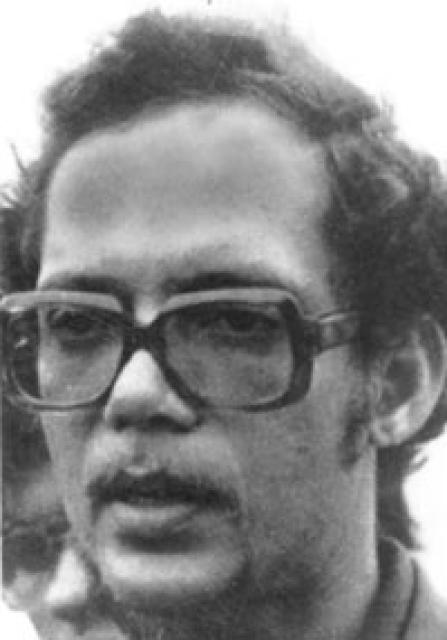
Bram Behr
 Suriname
- Early Life and Education
- Political Activism
- Journalism and Artistic Pursuits
- Opposition to Military Regime
- Foundation of the Communist Party of Suriname
- December Killings
- Legacy and Honor
Early Life and Education
Born on January 18, 1951, in Curaçao, the Dutch Caribbean island, Iwan Eduard Emanuels Rajcomar was a multifaceted figure. As a child, he showcased his musical talents as a violinist in the Philharmonic Orchestra. Rajcomar later pursued a career in education, teaching mathematics to young students.
Political Activism
In his early years, Rajcomar became actively involved in social and political causes. He dedicated himself to fighting illiteracy and organizing labor strikes to demand better working conditions for the working class. His activism and sharp intellect led him to become a well-respected journalist and public figure in Suriname.
Journalism and Artistic Pursuits
Rajcomar established himself as a renowned journalist, editing the newspaper "Mokro." In 1970, he spearheaded the anti-capitalist magazine "Red Suriname," through which he denounced US "colonial imperialism." His versatile talents extended beyond journalism, as he also authored fiction, crafted film scripts, and pursued photography.
Opposition to Military Regime
Despite initially supporting the 1980 "Sergeants' Coup" that overthrew the civilian government, Rajcomar quickly became a vocal opponent of the military regime led by Dési Bouterse. His unwavering stance against the regime's oppressive tactics earned him the respect of many Surinamese.
Foundation of the Communist Party of Suriname
On June 24, 1981, Rajcomar co-founded the Communist Party of Suriname, further solidifying his commitment to Marxist ideology. His political activities resulted in multiple arrests, including a notable incident in 1982 for writing a book exposing the atrocities committed by the military.
December Killings
Tragically, on December 8, 1982, Rajcomar became one of fifteen opposition figures murdered by supporters of the Bouterse regime at Fort Zeelandia. This event, known as the "December Killings," remains a dark chapter in Suriname's history. Rajcomar's life was cut short at the age of 31.
Legacy and Honor
Rajcomar's memory lives on through the Iwan Iwan Emanuels Rajcomar Foundation, established by his family to promote education, cultural development, and social justice. On December 13, 1982, he was laid to rest at the Annette's Hof Cemetery in Paramaribo. His legacy as a revolutionary, journalist, and martyr continues to inspire future generations of Surinamese activists.


