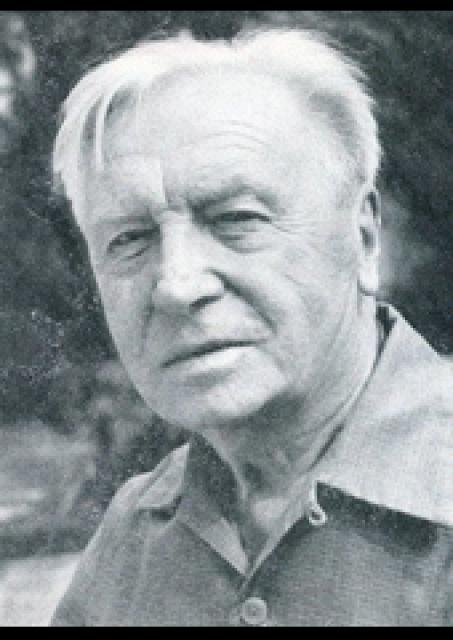
Bretislav Benda
- Bohumil Benda: A Master of Czech Sculpture
- War Interruption and Return to Education
- Artistic Philosophy
- Artistic Style and Techniques
- Notable Works and Legacy
Bohumil Benda: A Master of Czech Sculpture
Early Life and EducationBohumil Benda was born on March 7, 1897, in the Czech town of Milevsko. The son of a schoolteacher, he exhibited an early talent for drawing. He received his formal education in sculpture at the School of Sculpture in Hořice (1911-1915) and the Academy of Fine Arts in Prague (1915).
War Interruption and Return to Education
Benda's studies were interrupted by World War I, during which he served in the Austro-Hungarian army on the Italian front. He was severely wounded in both hands. After the war, he resumed his education at the Academy in Prague under the guidance of Professor Jan Štursa.
Artistic Philosophy
Benda's artistic philosophy revolved around the human body, particularly the female form. He famously declared, "I know of no more important theme than the human body, especially that of women."
Artistic Style and Techniques
Inspired by the principles of Jan Štursa and the work of Otto Gutfreund, Benda created sculptures in the neoclassical style from the 1920s onward. His early work featured the Madonna relief in his hometown. He later became renowned for his depictions of the nude female form. His sculptures were primarily carved in bronze or marble.
Notable Works and Legacy
Among Benda's most notable works are the "Shawl" series, the "Danaë" sculpture, and the "Student of Medicine" at the University of Prague. He was awarded the title of National Artist of Czechoslovakia. His son, Milan Benda, also became a renowned sculptor.
Bohumil Benda's exceptional talent and unwavering commitment to his art have left an indelible mark on Czech sculpture. His timeless works continue to inspire and captivate generations of art enthusiasts.


