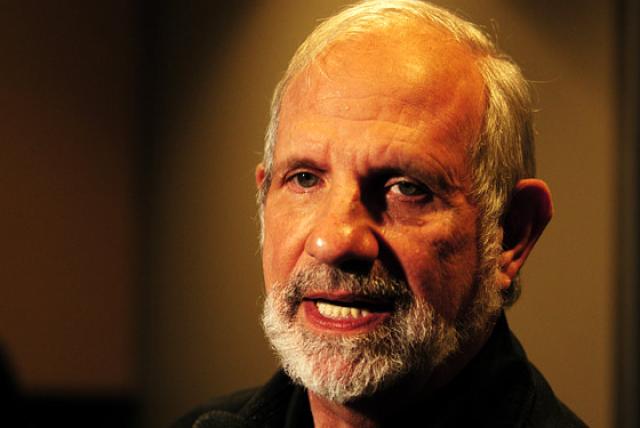
Brian De Palma
 USA
USA- Brian De Palma: Master of Multiple Genres
- Early Experiments and Breakthrough
- The Influence of Alfred Hitchcock
- Commercial Success in Horror and Thriller
- Gangster Epics and Critical Acclaim
- "The Untouchables" and Oscars
- Exploring War and Vanity
- Return to Gangster Cinema
- Blockbuster Success with "Mission: Impossible"
- Later Career and Critical Reception
- Legacy and Artistic Vision
Brian De Palma: Master of Multiple Genres
Early Life and InspirationBrian De Palma was born on September 11, 1940, in Newark, New Jersey. As a child, he pursued interests in astronomy and physics, even winning an award for his research paper on cybernetics at age 17. Upon graduating from high school, De Palma enrolled at Columbia University to study astrophysics.

His life took a dramatic turn after watching Alfred Hitchcock's "Vertigo." De Palma was so captivated by the film that he abandoned his academic pursuits to dedicate himself to cinema and theater. In 1960, he shot his first short film on a 16mm camera.

Early Experiments and Breakthrough
Over the next eight years, De Palma experimented with filmmaking, searching for his own unique style. His breakthrough came in 1968 with "Greetings," a comedic exploration of American society in the 1960s. The film garnered him the Silver Bear for Best Director at the Berlin International Film Festival.
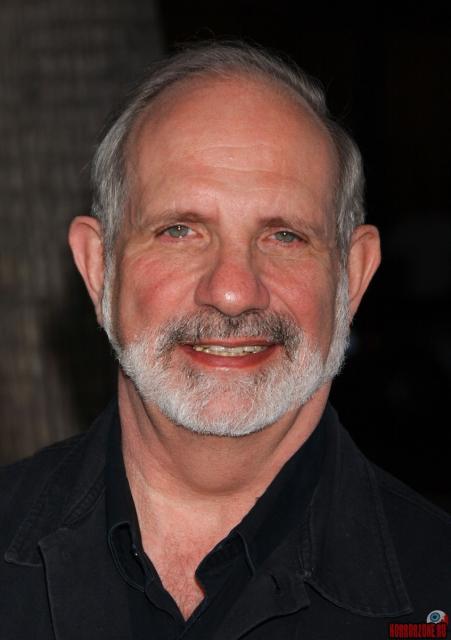
The Influence of Alfred Hitchcock
In the 1970s, De Palma began crafting thrillers that paid homage to his idol, Alfred Hitchcock. Particularly notable is "Sisters" (1973), which bears striking similarities to Hitchcock's "Rear Window." While the film was not commercially successful, it hinted at De Palma's future direction.
Commercial Success in Horror and Thriller
De Palma's 1976 adaptation of Stephen King's "Carrie" marked the first film version of the author's work. Critics praised De Palma's ingenuity in choreographing elaborate set pieces and lauded the film as a well-crafted genre piece.
Gangster Epics and Critical Acclaim
In the 1980s, De Palma surprised critics by venturing into the gangster genre. His 1983 film, "Scarface," written by Oliver Stone, is a remake of Howard Hawks' classic. It follows a Cuban refugee's rise from petty criminal to drug kingpin, Tony Montana. The film received mixed reviews but has since become a cult classic, ranking among the greatest gangster movies ever made.
"The Untouchables" and Oscars
In 1987, De Palma directed "The Untouchables," one of the most acclaimed action films of the 1980s. It depicts the battle between law enforcement and Al Capone during the Great Depression. The film's complex plot and stellar cast (Robert De Niro, Sean Connery) propelled it to box office success and critical praise. Connery won a Best Supporting Actor Oscar for his performance.
Exploring War and Vanity
"Casualties of War" (1989) tackled the controversial topic of the Vietnam War. Despite the success of war films by Stone, Coppola, and Kubrick, De Palma's attempt to offer a fresh perspective fell flat, resulting in an audience and critical failure. "The Bonfire of the Vanities" (1990) met a similar fate.
Return to Gangster Cinema
In the 1990s, De Palma returned to his favored genre with "Carlito's Way" (1993), starring Al Pacino. The film garnered positive reviews but was not a major commercial success.
Blockbuster Success with "Mission: Impossible"
De Palma achieved blockbuster success with "Mission: Impossible" (1996), starring Tom Cruise. The film, based on the popular television series, follows the exploits of secret agent Ethan Hunt. It grossed over $180 million worldwide, becoming one of the highest-grossing films of the year.
Later Career and Critical Reception
In recent years, De Palma has been less active as a director. Among his notable late works are the Hitchcockian thriller "Femme Fatale" (2002) and the noir-infused "The Black Dahlia" (2006). The latter, a period piece set in the 1940s, follows two police detectives investigating a string of mysterious murders. While the film was not a box office hit, it was well-received by critics.
Legacy and Artistic Vision
Having begun his career as a disciple of Alfred Hitchcock, Brian De Palma charted his own path by embracing gangster cinema, where he achieved critical and popular acclaim. Simultaneously, he crafted some of the most iconic thrillers and horror films, often shrouded in a captivating noir atmosphere. His unique style and approach to filmmaking solidified his reputation as a talented director with a distinct cinematic vision.


