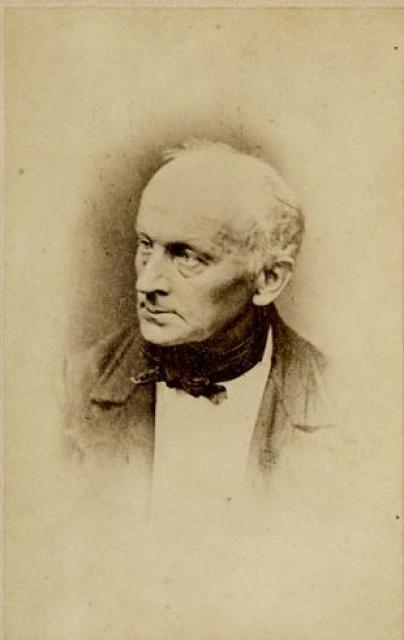
Bruno Bauer
 Germany
- Early Life and Education
- Hegelianism and Early Theological Works
- Biblical Criticism and Controversy
- Historical Studies and Political Writings
- Pessimism and Later Views
- Final Period and Legacy
Early Life and Education
Bruno Bauer was born on September 6, 1809, in Eisenberg, Duchy of Saxe-Altenburg. He received his education at the University of Berlin, where he became a Privatdozent (adjunct lecturer) in theology in 1834.
Hegelianism and Early Theological Works
Initially, Bauer was an advocate of orthodox Hegelianism, as evidenced in his early writings, "Zeitschrift für speculative Theorie" (1836-1838) and "Kritische Darstellung der Religion des alten Testaments" (1838). However, his views shifted after moving to Bonn in 1839, where he joined the radical wing of Hegelianism known as Young Hegelians.
Biblical Criticism and Controversy
Bauer's critical examination of the Bible led him to question the authenticity of the Gospel of John and the authorship of the Pauline epistles. These views, expressed in his "Kritik der evangelischen Geschichte der Synoptiker" (1840), led to his dismissal from his teaching position.
Historical Studies and Political Writings
Following the controversy, Bauer turned to historical research, focusing on the 18th and 19th centuries. His works include "Geschichte der Französischen Revolution" (1847), "Geschichte Deutschlands unter der Französischen Revolution" (1846), and "Geschichte der Politik, Kultur und Aufklärung des XVIII Jahrhunderts" (1843-1845). He also engaged in political analysis, penning "Die gute Sache der Freiheit und meine eigentliche Angelegenheit" (1843) and founding the "Allgemeine Litteraturzeitung" (1843-1844).
Pessimism and Later Views
Bauer's pessimism about German culture led him to see Russia as the future beacon of civilization. However, the events of 1870-1871 reconciled him with Germany, and he became an enthusiastic supporter of Bismarck.
Final Period and Legacy
In his later years, Bauer reverted to political and philosophical conservatism, becoming a vocal advocate of Prussian conservatism. He died on April 13, 1882, in Rixdorf, near Berlin. Bruno Bauer's legacy as a pioneering biblical critic and a controversial theologian continues to be debated today.


