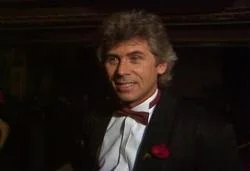
Bruno Ganz
Bruno Ganz (22 March 1941 – 16 February 2019) was a Swiss actor whose nearly six-decade career ranged from experimental theatre to internationally acclaimed films. Celebrated for his precision, emotional restraint and ability to make inward lives visible, he became one of the most respected performers in German-language theatre and cinema. Audiences around the world came to know him as the angel Damiel in *Wings of Desire* and as Adolf Hitler in *Downfall*, two roles that showed the remarkable distance his acting could travel.
Early life and training
Ganz was born in Zurich to a Swiss factory worker and an Italian mother. He became interested in acting while still at school and left before completing his final examinations to pursue theatre. He studied at Zurich’s University of Music and Theater, then began working on stage in the early 1960s. His screen debut came in 1960 in the Swiss film *Der Herr mit der schwarzen Melone* (“The Man in the Black Derby”).
Ganz’s early work established a pattern that would mark his career: he was drawn to demanding roles and ambitious productions rather than to a single screen persona. He worked in German-speaking theatre and gradually earned a reputation as an actor able to combine intellectual rigor with emotional openness.
The stage and the Schaubühne
In 1970, Ganz joined the ensemble of the Schaubühne in Berlin, one of the most influential German theatre companies of the era. There he worked with leading directors including Peter Stein, Peter Zadek, Claus Peymann, Klaus Michael Grüber, Luc Bondy and Dieter Dorn. The ensemble’s collaborative approach and appetite for formally challenging work suited his exploratory style.
A landmark came at the 1972 Salzburg Festival, where he performed in the world premiere of Thomas Bernhard’s *The Ignoramus and the Madman*, directed by Claus Peymann. The role brought him wide recognition and he was named Actor of the Year. His stage work continued to be central even as he took on more film projects, and his performances helped shape a generation’s understanding of modern German-language theatre.
In 1996, Austrian actor Josef Meinrad passed the Iffland Ring to Ganz. Traditionally bestowed by its holder on the actor considered most significant in German-language theatre, the ring became one of the clearest signs of his standing on stage. Ganz held it until his death.
Film career
Ganz’s filmography includes collaborations with some of Europe’s most distinctive directors. In Wim Wenders’s *The American Friend* (1977), he played a German picture framer drawn into a criminal plot. He later appeared as Jonathan Harker in Werner Herzog’s *Nosferatu the Vampyre* (1979). His international breakthrough came with Wenders’s *Wings of Desire* (1987), in which he portrayed Damiel, an angel who longs to experience human life. The film’s quiet poetry and Ganz’s thoughtful performance made the role enduring.
He continued to move between national cinemas and genres. In Silvio Soldini’s *Bread and Tulips* (2000), he played a gentle Venetian waiter, a performance that earned him the Swiss Film Award for Best Actor and a David di Donatello. He later appeared in films including *The Reader* and Terrence Malick’s *A Hidden Life*.
His performance as Hitler in Oliver Hirschbiegel’s *Downfall* (2004) introduced him to a vast new audience. The role demanded a portrayal of a historical figure whose crimes are beyond question while conveying the physical and psychological collapse of the final days in the bunker. Ganz’s controlled, unsettling performance became one of the film’s defining elements and remains among his best-known screen roles.
Recognition and final years
Ganz received major recognition in Switzerland and across Europe. In 2001 he won the Swiss Film Award for Best Actor for *Bread and Tulips*. In 2017 he received both another Swiss Film Award for his role in *A Jew for the Example* and the Swiss Honorary Award for his contribution to cinema. He continued acting into his final years, with *A Hidden Life* among his late screen appearances.
He died in February 2019, aged 77. His work had moved comfortably between theatre and film, but the stage remained a lasting reference point: even his most famous screen performances carried the concentration and discipline of a theatre actor.
Legacy
Bruno Ganz left a body of work defined by range and attention. He could play an ordinary man caught in extraordinary circumstances, an angel watching over a city, or a dictator facing defeat, without reducing any role to a single gesture. In theatre, his collaborations helped make the Schaubühne a defining force in modern European performance. In film, he gave audiences a series of characters that remained vivid long after the final scene.