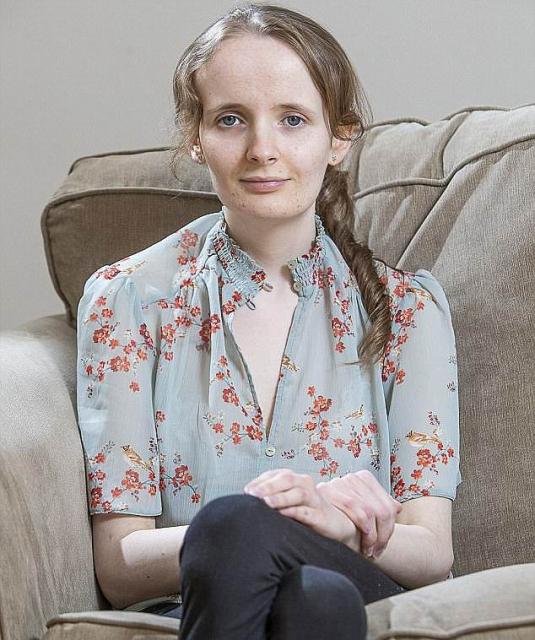
Caitlin White
 Great Britain
- A Rare Condition and its Devastating Effects
- Strained Organs and Limited Options
- A Fight for a Future
- Social Isolation and a Shattered Dream
- The Promise and Peril of Total Parenteral Nutrition
- Refeeding Syndrome and Other Complications
- Accusations and a Rare Disorder
- Fundraising and Public Support
- Understanding Gastric Paresis
- - Feeling full after consuming only a few spoonfuls
A Scottish Teenager's Battle with Gastric Paresis and Ehlers-Danlos Syndrome
A Rare Condition and its Devastating Effects
Caitlin White, a 19-year-old Scottish woman from Perth, faces a life-threatening illness that has caused her to lose a significant amount of weight and suffer from severe nausea. Diagnosed with gastric paresis, a rare bowel condition, Caitlin's weight has plummeted to just over 38 kilograms (around 84 pounds). Her life has become a constant cycle of hospital visits, where she receives intravenous fluids that can take up to 12 hours to absorb. While this life-sustaining procedure helps her survive, it also suppresses her immune system, making her susceptible to infections. This year alone, Caitlin has fought off sepsis seven life-threatening times.
Strained Organs and Limited Options
Malnourished and at risk of organ failure, Caitlin has been offered total parenteral nutrition (TPN) as a "last resort." This treatment delivers nutrients directly to the liver, bypassing the digestive system. While TPN could potentially stop her vomiting, doctors warn it might lead to a "catch-22" situation. TPN can cause deadly infections and blood clots that could prove fatal.
A Fight for a Future
Caitlin shares her story publicly in the hopes of raising awareness and funding for her medical expenses. However, she does not shy away from the reality that doctors have given her just six months to live. Caitlin's ordeal began when she weighed 70 kilograms (about 154 pounds) at the age of 14. Her condition has steadily worsened, and doctors have resorted to inserting IVs up to 18 times just to find a vein to administer potassium, magnesium, and iron.
Social Isolation and a Shattered Dream
Caitlin's once-vibrant life has been severely curtailed by her illness. The constant vomiting has made her withdraw from social situations, cutting off ties with friends. "I can't go out for meals or coffee anymore, which is really embarrassing," she explains. Additionally, severe constipation, lasting up to seven weeks at a time, leads to bacterial buildup in her small intestine, further compromising her immune system. Despite the bleak prognosis, Caitlin clings to hope for a future where she can travel and pursue a career in medicine.
The Promise and Peril of Total Parenteral Nutrition
After her case came to the attention of the chief executive and medical director of the NHS in Scotland, Caitlin was seen by a consultant in Glasgow who discussed TPN with her. "This is not the sort of thing that you can just go on without a real risk for many years," the unnamed consultant said. Caitlin added, "If I were to go onto a feed (TPN) that bypasses the whole gut, I would be at high risk of refeeding syndrome, infection, and blood clots." However, she acknowledges that "without it, there's still the risk of infection. As it is, I'm not getting enough nutrition, and the risk of my organs failing is still there."
Refeeding Syndrome and Other Complications
Refeeding syndrome can occur when severely starved or malnourished patients receive artificial nutrition. It can lead to life-threatening shifts in fluid and electrolytes. In an interview with the Herald Scotland, Caitlin expressed feeling "let down" by medical professionals after experiencing multiple failed attempts at inserting feeding tubes between 2014 and 2018.
Accusations and a Rare Disorder
Compounding Caitlin's struggles, she has also been diagnosed with Ehlers-Danlos syndrome, a condition that causes muscle weakness. Impaired collagen production has resulted in the feeding tubes falling out within hours of insertion. Caitlin's grandmother, 68-year-old Laura, alleges that medical staff have accused her granddaughter of deliberately pulling out the tubes and suggested she may have an eating disorder, dismissing her discomfort as "phantom pain."
Fundraising and Public Support
As of August 30, 2018, Caitlin has raised £4,672 of her £6,000 goal on the Justgiving platform, with contributions from 43 people. The community has rallied around her, offering financial and emotional support.
Understanding Gastric Paresis
Gastric paresis is a digestive disorder that affects the activity of the stomach muscles. It affects over 1.5 million people in the United States, and up to 4% of the UK population. The disorder can lead to feelings of nausea and vomiting, as well as blood sugar problems and nutritional deficiencies. Other symptoms include:
- Feeling full after consuming only a few spoonfuls
- Acid reflux- Abdominal bloating and pain
- Weight loss
- Poor appetite
Gastric paresis can develop as a complication of diabetes, surgeries, or infections. The condition is believed to be caused by damage to the nerve that controls the stomach muscles. Certain medications, such as antidepressants and painkillers, can also delay the movement of stomach contents into the small intestine and induce similar symptoms. Complications of gastric paresis include severe dehydration from vomiting, malnutrition, reduced quality of life, and food stagnation in the stomach. While there is no cure for gastric paresis, eating small meals and chewing food thoroughly can provide some relief. Medications are available to manage nausea and vomiting. If patients are unable to tolerate either solid or liquid food, a surgical procedure to place a feeding tube may be necessary.


