Callixtus I
- An uncertain early life
- The cemetery on the Appian Way
- A pope known for mercy and dispute
- Death and remembrance
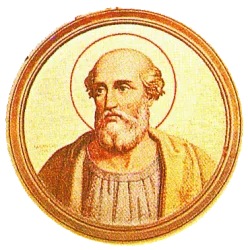
Callixtus I rose from a difficult early life to lead the Christian community in Rome during the early third century. Remembered as a pope, saint and martyr, he also became a controversial figure in his own time. His name is still attached to one of Rome’s most famous ancient burial places, the Catacombs of Saint Callixtus, though the story of the man behind that name is preserved through sources that do not always agree.
An uncertain early life
The details of Callixtus’ youth come largely from accounts written by his opponents, so they require care. A polemical work traditionally attributed to Hippolytus, a rival Christian leader in Rome, portrays Callixtus as a former slave entrusted with money collected for widows and orphans. It alleges that he lost the funds and was punished, later being sent to work in the mines of Sardinia. The same account says he was eventually released through the intervention of Marcia, a powerful woman at the imperial court.
These episodes cannot be treated as a neutral biography. The author was deeply hostile to Callixtus and used his past to undermine his authority. Still, the portrait suggests that Callixtus came from outside the established elite and experienced hardship before gaining responsibility within the church. After his release, he lived at Antium, where Pope Victor I supported him.
The cemetery on the Appian Way
When Zephyrinus became bishop of Rome, Callixtus returned to the city and became a close associate. Zephyrinus placed him in charge of a Christian burial ground along the Appian Way. This cemetery, later known as the Catacombs of Saint Callixtus, became one of the most important early Christian burial sites in Rome. It reflects the church’s growing ability to maintain shared institutions and care for its dead during a period when Christians remained a minority in the empire.
Callixtus succeeded Zephyrinus around 217 or 218 and led the Roman church until about 222 or 223. The exact dates vary among historical sources. His elevation was challenged by Hippolytus, who rejected Callixtus’ theological views and his approach to church discipline. The dispute became a schism, with Hippolytus’ followers recognizing him as a rival bishop. The conflict shows that early Christian communities were already wrestling with questions about authority, doctrine and who could be welcomed back after serious wrongdoing.
A pope known for mercy and dispute
Hippolytus accused Callixtus of allowing too many penitents to return to communion, including people guilty of sexual sins. The polemic also attacked his willingness to permit marriages across social boundaries. Those criticisms reflect the rigorist outlook of the rival faction, and modern scholars caution that the surviving account was intended to discredit him. From Callixtus’ perspective, the church’s discipline may have been an effort to balance moral seriousness with the possibility of forgiveness.
Theological disagreements also played a part. The early church was still working through how to describe the relationship between God the Father and Christ, and debates over language could divide congregations. Hippolytus accused Callixtus of doctrinal confusion; Callixtus, in turn, opposed teachings he regarded as heretical. The disagreement was not merely personal: it was part of the larger struggle to define Christian belief and authority in Rome.
Death and remembrance
Callixtus died around 222 or 223. Later tradition honored him as a martyr, linking his death to violence in the Trastevere district of Rome. The exact circumstances are uncertain, and there is no clear evidence that he died in an official imperial persecution. His feast day is observed on 14 October.
Although the catacombs that bear his name were not his own burial place, they became a lasting monument to his leadership and to the expanding Roman church. Callixtus himself was buried in the cemetery of Calepodius on the Via Aurelia. In later centuries, his remains were transferred to a church in Trastevere.
His legacy is a fascinating mix of institutional achievement and historical controversy. Callixtus helped oversee an important Christian cemetery and led the Roman community through disputes over doctrine and forgiveness. The harshest stories about his early life come from an adversary, while his later reputation as pope and saint reflects how his community remembered him. Together, those conflicting perspectives make him one of the most vivid and complicated leaders of early Christianity.