
Camilo Torres
 Colombia
Camilo Torres Biography
Camilo Torres was a Colombian Roman Catholic priest, one of the founders of liberation theology, and a member of the National Liberation Army (ELN) in Colombia. Born on February 3, 1929, in Bogotá, he dedicated his life to trying to reconcile revolutionary Marxism with Catholicism. Torres was expelled from Nuestra Señora del Rosario de Bogotá, a prestigious college, for criticizing his professors, and he obtained a bachelor's degree from the Cervantes Lyceum.
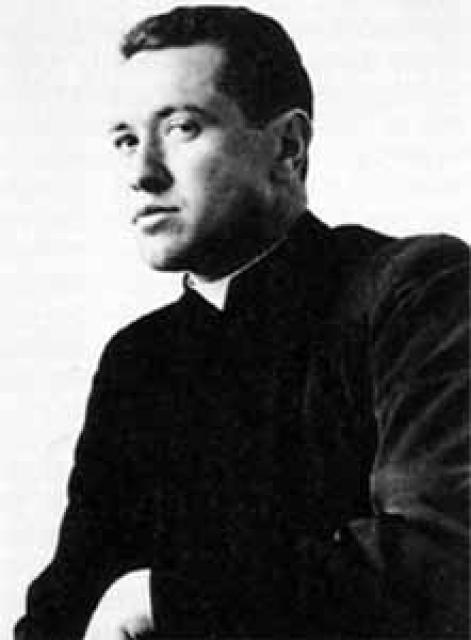
In 1954, Torres was ordained as a priest, but he continued his studies at the Episcopal Catholic University in Leuven, Belgium, for several years after that. Upon returning to Colombia, he felt compelled to actively help the working class and the poor. Camilo Torres believed that Christians should use violence to achieve justice for all people. As a member of the faculty at the National University of Colombia, he co-founded the Faculty of Sociology in 1960 with Orlando Fals Borda. His involvement in various student and political movements attracted many followers, but also many detractors, particularly within the government and the church.
As pressure and criticism of his radical positions intensified, Camilo Torres had to leave his position at the university, go underground, and join the Colombian guerrilla movement. He served as a rank-and-file member of the ELN, providing spiritual assistance and inspiring the guerrillas with his Marxist-Christian perspectives. He was killed in his first battle during an attack on a Colombian military patrol. After his death, he was officially recognized as a martyr by the ELN.
His most famous quote is: "If Jesus were alive today, He would be a guerrillero." Uruguayan songwriter Daniel Viglietti wrote a song about Camilo Torres in 1967, popularized by Chilean singer Víctor Jara.
In 1970, a revolutionary group called CORECATO (Revolutionary Command Camilo Torres) was founded in the Dominican Republic, including Catholic priests and university students. The group fought against the repression of the government of Joaquín Balaguer. Among its members were Carlos "Carlitiko" Sánchez, who died for the cause of Marxism in Peru, and Amauri Herman Aristi, who fought the police and soldiers of the Dominican army for over ten hours before perishing in battle.


