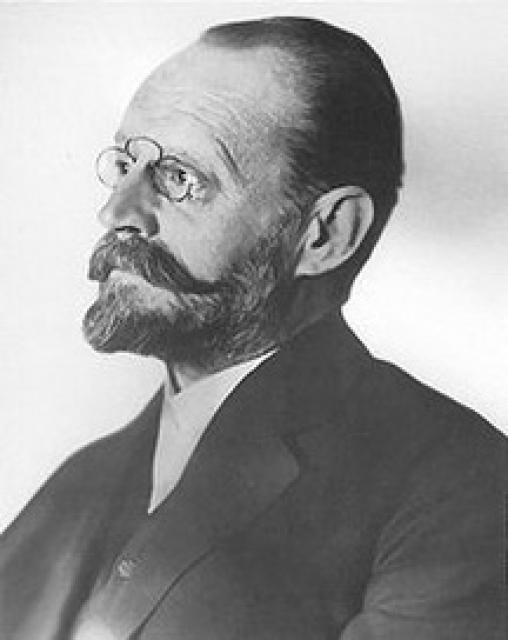
Carl Auer Welsbach
 Austria
- Early Life and Education
- Academic and Industrial Career
- Research at a Chemical Factory (1887-1900)
- Leadership at a Metallurgical Plant (1900-1929)
- Scientific Innovations
- Gas Mantle and Auer Burner
- Later Innovations
- Osmium Filament
- Legacy
Early Life and Education
Carl Auer von Welsbach, an Austrian chemist, was born on September 1, 1858, in Vienna, Austria. He studied at the University of Vienna and the University of Heidelberg from 1878 to 1882.
Academic and Industrial Career
Work at the University of Vienna (1882-1887)After graduating, Auer returned to the University of Vienna, where he worked on a chemical project.
Research at a Chemical Factory (1887-1900)
In 1887, Auer joined a chemical factory near Vienna that produced rare earth salts. He made significant contributions to the understanding of these elements.
Leadership at a Metallurgical Plant (1900-1929)
In 1900, Auer became the manager of a metallurgical plant in Treibach, Austria. He established a large chemical laboratory on-site, which later developed into the Treibacher Industrie AG.
Scientific Innovations
Discovery of Rare EarthsAuer's most notable work was on rare earth elements. In 1885, he demonstrated that the element didymium, discovered by Carl Gustav Mosander, was a mixture of two other elements: praseodymium and neodymium.
Gas Mantle and Auer Burner
Auer invented the gas mantle, a catalyst that greatly enhanced the luminosity of gas flames. He patented the gas mantle in 1885. It became known as the "Auer burner."
Later Innovations
Artificial FlintIn 1898, Auer developed an artificial flint for lighters using a cerium-iron alloy.
Osmium Filament
In 1900, Auer proposed using osmium filaments in incandescent lamps instead of carbon filaments. While this innovation was not widely adopted due to the high cost of osmium, it paved the way for the tungsten filaments that are still used today.
Legacy
Carl Auer von Welsbach died on August 4, 1929, in Mödling, Austria. His contributions to the field of chemistry and lighting technology have left a lasting legacy. He is remembered for his pioneering work on rare earth elements and his invention of the gas mantle, which revolutionized lighting in the late 19th century.



