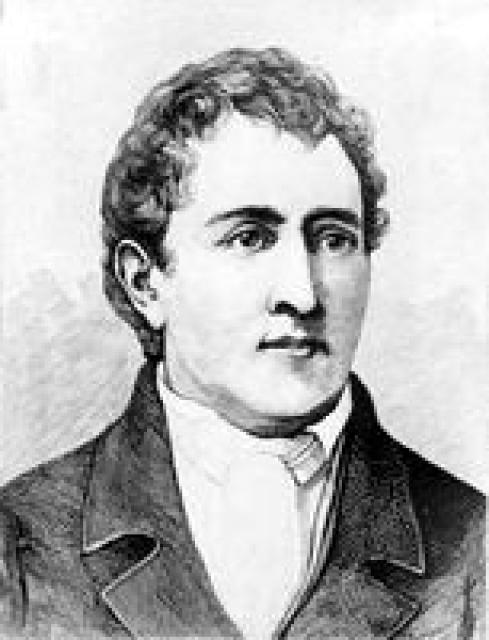
Karl Shvele
 Sweden
Biography of Carl Wilhelm Scheele
Carl Wilhelm Scheele, a Swedish chemist, was born on December 9, 1742, in Stralsund. He became a member of the Royal Swedish Academy of Sciences in 1775. Scheele started his career as a pharmacist and conducted chemical research in various pharmacies across Sweden from 1757.
Discoveries
Scheele made numerous discoveries in both inorganic and organic chemistry. In 1774, he demonstrated that pyrolusite, previously thought to be a variety of magnetic iron ore, was actually a compound of an unknown metal. He also synthesized chlorine by heating pyrolusite with hydrochloric acid in 1774. Scheele discovered glycerin by treating animal and vegetable fats with lead oxide, and he obtained molybdenum oxide (1778) and tungsten oxide (1781) from the minerals molybdenite and scheelite, respectively.
Scheele's other notable discoveries include tetrafluorosilane (1771), barium oxide (1774), hydrogen arsenide (1775), several acids such as acetic acid (1769), hydrofluoric acid and silicofluoric acid (1771), arsenious acid (1775), oxalic acid (1776), lactic acid (1780), and prussic acid (1782).
Furthermore, in 1769, he developed a method for producing phosphorus from bone ash. Scheele also observed the ability of freshly burned charcoal to absorb gases in 1777, which he discovered simultaneously with Felice Fontana.
Contributions to the Understanding of Air
In his work "Chemical Treatise on Air and Fire," Scheele described the properties and production of "fire air" and identified atmospheric air as a mixture of two types of air: "fire air" (oxygen) and "phlogisticated air" (nitrogen). However, the credit for the discovery of oxygen goes to Joseph Priestley in 1774, as Scheele's work was only published in 1777.
Curious Death
Scheele had a peculiar habit of tasting everything he worked with, as it was customary at that time to describe the taste of substances in scientific reports. Unfortunately, this practice ultimately cost him his life. In 1786, Scheele was found dead at his workplace surrounded by toxic chemicals. Some sources attribute his death to prussic acid.



