Carl Dahlhaus
 Germany
- Carl Dahlhaus
- Early Life and Education
- Academic Career
- Contributions to Musicology
- Philosophical Influences
- International Recognition
- Legacy
Carl Dahlhaus
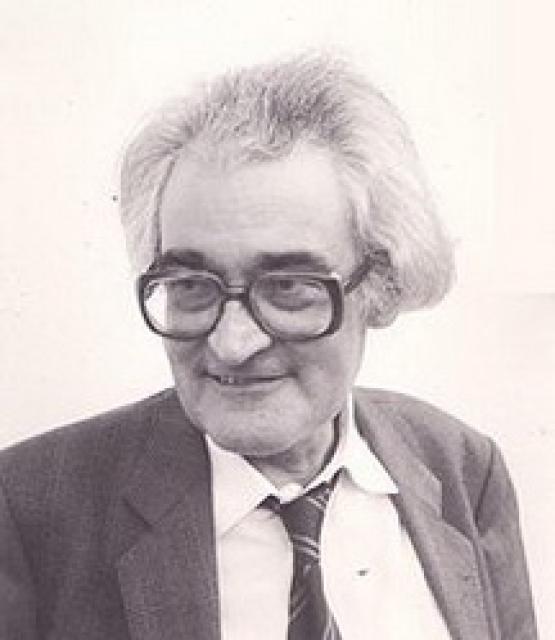
Carl Dahlhaus (June 17, 1928 – March 13, 1989) was a German musicologist, theorist, historian, and philosopher, known for his groundbreaking work on the development of tonal harmony and musical aesthetics.
Early Life and Education
Born in Hannover, Germany, Dahlhaus studied at the University of Göttingen from 1947 to 1952, under Willibald Gurlitt and Rudolf Gerber. He received his PhD in 1966 for his dissertation on the formation of classical major-minor tonality.
Academic Career
In 1967, Dahlhaus joined the Technical University of West Berlin as a professor, where he remained until his death. He collaborated with Hans Heinrich Eggebrecht on the 12th edition of Riemann's Musiklexikon and edited the monumental series "Neues Handbuch der Musikwissenschaft."
Contributions to Musicology
Dahlhaus's research encompassed a vast range of topics in music history, theory, and aesthetics. He is particularly known for his pioneering work on the history of harmony. His studies of rhythmic systems in European music, from medieval mensural notation to modern-day time signatures, are also highly regarded.
Philosophical Influences
Dahlhaus's writings were deeply influenced by philosophical phenomenology and hermeneutics. He emphasized the intentional nature of musical language and its dependency on the verbal interpretations shaped by historical understandings of music.
International Recognition
Dahlhaus's work has been translated into numerous languages and has had a profound impact on musicology worldwide. He served as president of the German Musicological Society from 1977 to 1979.
Legacy
Carl Dahlhaus was an intellectual giant of 20th-century musicology. His meticulous scholarship, interdisciplinary approach, and philosophical insights continue to inspire and inform generations of musicians and scholars.