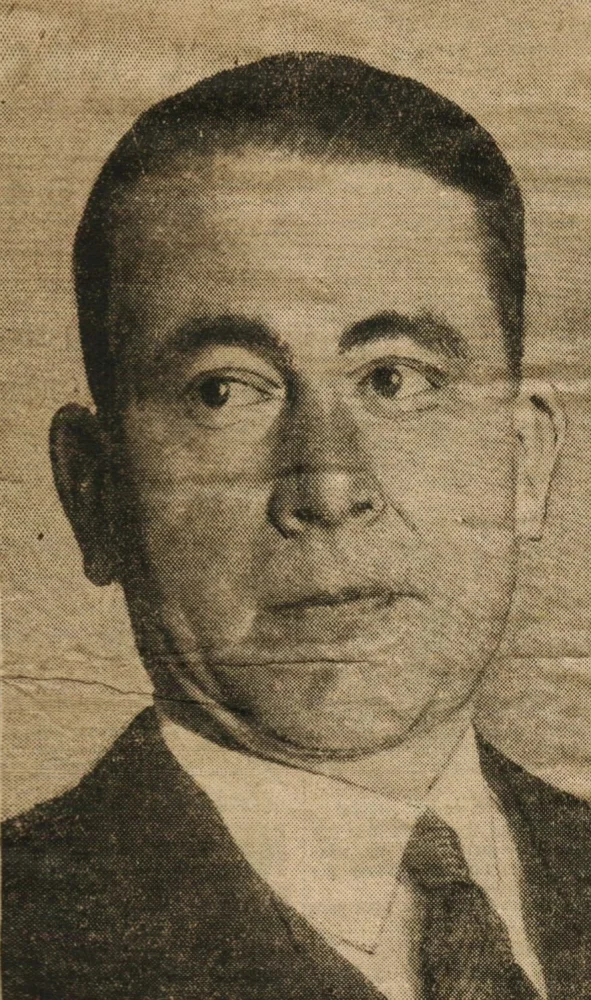
Carl Schmitt
- From provincial Germany to the law faculty
- A jurist for the Nazi regime
- After 1945
- An enduring and contested legacy
Carl Schmitt became one of the twentieth century’s most influential and most troubling legal theorists. His writing on sovereignty, emergency powers, and political conflict shaped debates far beyond Germany. Yet his intellectual legacy cannot be separated from his decision to join the Nazi Party and use his legal expertise in defense of Hitler’s dictatorship and its persecution of Jews and political opponents.
From provincial Germany to the law faculty
Schmitt was born on 11 July 1888 in Plettenberg, Westphalia, to a Catholic family. He studied law in Berlin, Munich, and Strasbourg, earning his doctorate in 1910 and completing the qualification for a university teaching career in 1916. After the First World War, he held academic posts in Greifswald, Bonn, Cologne, and Berlin, specializing in public law and constitutional theory.
The upheavals of the Weimar Republic became the setting for his most influential books. In Political Theology (1922), he made the provocative claim that “Sovereign is he who decides on the exception,” arguing that the decisive question in a crisis was who had the power to suspend normal rules. In The Crisis of Parliamentary Democracy (1923), he attacked liberal parliamentarism, while The Concept of the Political (1932) defined the political through the distinction between friend and enemy. Those ideas made him a formidable critic of liberal democracy and an advocate of strong executive authority.
A jurist for the Nazi regime
Schmitt advised conservative governments during the final years of Weimar, including the administrations of Heinrich Brüning and Kurt von Schleicher. After Hitler became chancellor, Schmitt rapidly aligned himself with the new dictatorship. He joined the Nazi Party on 1 May 1933, took influential legal and political posts, and became a Prussian State Councillor. His stature brought him the label “crown jurist of the Third Reich.”
His support was active. In 1934, he defended Hitler’s extrajudicial killings during the purge known as the Night of the Long Knives, presenting the leader as the supreme source of law. He also promoted the removal of Jewish influence from German legal scholarship and took part in the regime’s antisemitic legal campaigns, including discussions surrounding the Nuremberg racial laws. His turn to Nazi racial language showed how readily he adapted his theories to justify the dictatorship.
In 1936, SS-linked criticism accused him of opportunism and pointed to earlier associations with Jewish colleagues. He lost important party and professional positions, but his standing within the regime and his academic career did not simply vanish. He continued to teach and publish during the Nazi era. His later work on international law, including The Nomos of the Earth, examined the changing order among states, but it was written by a scholar already deeply compromised by his service to the regime.
After 1945
Allied forces arrested and interrogated Schmitt after Germany’s defeat. He spent nearly a year in detention and was questioned again in Nuremberg in 1947 as a possible witness or defendant, but was not prosecuted. He rejected the denazification process and never returned to a university chair. He settled in Plettenberg, where he continued writing, receiving visitors, and corresponding with scholars and political figures.
Schmitt’s private life included two marriages. His first marriage ended in civil annulment; in 1926 he married Duška Todorović, with whom he had a daughter, Anima. His wife died in 1950, and he spent the rest of his life in relative isolation from academic institutions, while still attracting a circle of admirers.
An enduring and contested legacy
Schmitt died in Plettenberg on 7 April 1985. His theories continue to attract readers in law, political philosophy, theology, and international relations, especially his questions about who rules during emergencies and how political communities define themselves. They are also studied as warnings about the way legal reasoning can be turned against constitutional safeguards and human equality.
The debate around his work remains inseparable from his record. Some readers find tools in his critique of liberal institutions; others emphasize how his own concepts helped legitimate dictatorship, racial exclusion, and state violence. His career stands as a stark example of the influence a jurist can gain—and the responsibility that comes with using law to serve political power.