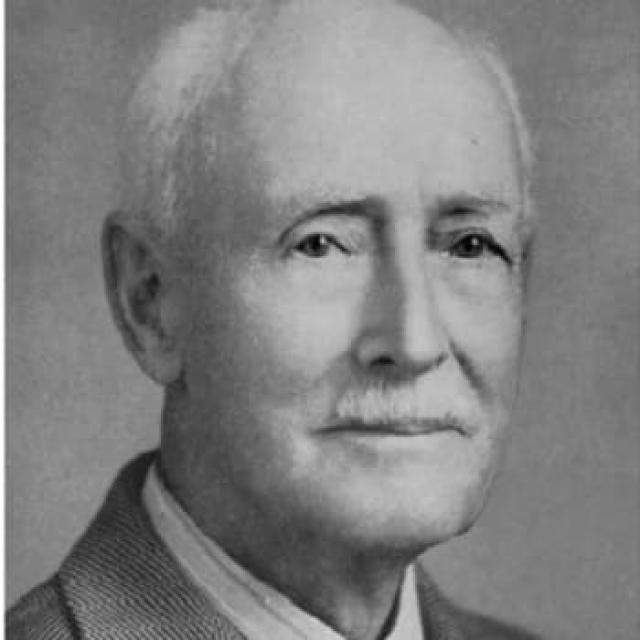
Carl Seashore
 Sweden
- Early Life and Education
- Yale University and Psychological Research
- Research at the University of Iowa
- Theory of Musical Abilities
- Classification of Musical Abilities
- Vocal and Instrumental Studies
- Later Career and Notable Achievements
Early Life and Education
Carl Emil Seashore was born into a farming family in Märlunda, Sweden, in 1866. His birth surname, Sjöstrand, was later anglicized to Seashore by his uncle, who emigrated to the United States before the rest of the family. In 1870, Seashore's family immigrated to Iowa and settled on an 80-acre farm. Seashore received his early education at home, along with his siblings. He began attending his father's local school at age eight and taught in local schools after graduating in 1882.
In 1891, Seashore graduated from Gustavus Adolphus College, where he excelled in mathematics, music, foreign languages, and literature. He delivered a speech on the power of music to express emotions.
Yale University and Psychological Research
Seashore obtained his doctorate in philosophy from Yale University in 1895, becoming the first psychology graduate to earn a Ph.D. from the institution. He worked in Yale's psychological laboratory under the guidance of George Trumbull Ladd and Edward Scripture, where he gained expertise in experimental methods, psychological statistics, and Edward Titchener's structural psychology.
Research at the University of Iowa
In 1897, Seashore became the director of the psychological laboratory at the University of Iowa. There, he continued his experimental research, including studies in the psychology of music.
Theory of Musical Abilities
Seashore developed a "theory of attributes" for musical abilities, proposing that musical talent was not a single entity but rather a combination of innate traits. Based on this theory, he created the first standardized test, the "Seashore Measures of Musical Talent," to assess individuals' musical abilities and determine their potential for musical pursuits.
Classification of Musical Abilities
Seashore identified 25 musical abilities, including:- Pitch, intensity, and time discrimination
- Rhythm, timbre, and consonance perception
- Control of pitch, intensity, time, and rhythm
- Auditory and motor imagery, creative imagination, and musical memory
- Learning ability, musical associations, musical taste, and emotional responses
Vocal and Instrumental Studies
Seashore's research extended to the study of musical sounds, specifically the human voice, piano, and violin.
Later Career and Notable Achievements
Seashore's final book, "In Search of Beauty in Music" (1949), emphasized the emotional and aesthetic aspects of musical experiences. He served as President of the American Psychological Association in 1947 and authored over 237 publications in psychology and music.


