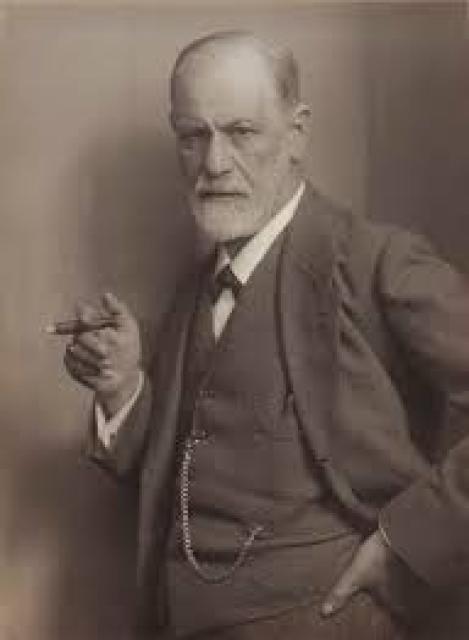
Sigmund Freud
 Austria
- Sigmund Freud: The Father of Psychoanalysis
- Neurological Explorations
- Development of Psychoanalysis
- Foundation of Psychoanalysis
- Controversial Theories
- Recognition and Legacy
- Later Life and Death
- Legacy and Impact
Sigmund Freud: The Father of Psychoanalysis
Early Life and StrugglesSigmund Freud was born on May 6, 1856, in Freiberg, Moravia. At a young age, his family moved to Vienna, where he faced poverty, anti-Semitism, and academic setbacks. After graduating from medical school reluctantly, Freud turned his attention to neurology and psychiatry in an attempt to find greater financial success.
Neurological Explorations
In 1884, Freud spent time in Paris studying under the renowned neurologist Jean-Martin Charcot. There, he was captivated by the treatment of hysteria through hypnosis. However, upon returning to Vienna, his hopes of establishing a reputation were dashed when his research failed to gain traction.
Development of Psychoanalysis
Desperate for financial success, Freud began treating patients with nervous disorders in his own private practice. Initially employing techniques like electrotherapy and hypnosis, he found limited results. In 1896, after experiencing resistance from a patient named Emma von N., Freud shifted to the "method of free association." This involved having patients speak their minds freely while he listened without interrupting or offering judgment.
Foundation of Psychoanalysis
Freud gradually developed the principles and techniques of psychoanalysis. He believed that unconscious processes, particularly sexual drives, shape human behavior and personality. He introduced couch therapy, limited sessions to 45-50 minutes, and adopted a neutral, non-interfering stance toward patients.
Controversial Theories
Freud's ideas sparked widespread controversy. His theories on infantile sexuality, the Oedipus complex, and the id, ego, and superego were met with resistance and criticism. However, his work also gained ardent followers and began to gain popularity among intellectuals and artists of the early 20th century.
Recognition and Legacy
By the early 1900s, Freud had established himself as a leading figure in psychology. In 1902, he became a professor and opened his home for the Vienna Psychoanalytic Society's meetings. His fame grew through books like "The Interpretation of Dreams" and "Three Essays on the Theory of Sexuality." In 1922, he was honored as one of five great geniuses by the University of London alongside Philo, Memnonides, Spinoza, and Einstein.
Later Life and Death
In 1923, Freud was diagnosed with oral cancer. Despite his physical decline and intense pain, he continued to write and theorize. In his later works, he explored the themes of death and human aggression. Freud died in London on September 23, 1939, one of the most influential intellectuals of the 20th century.
Legacy and Impact
Freud's legacy is complex and enduring. His theories on the unconscious mind and human sexuality have had a profound impact on psychology, philosophy, and literature. Psychoanalysis has become a widely practiced therapeutic approach, while its principles continue to shape modern understandings of human experience and behavior.


