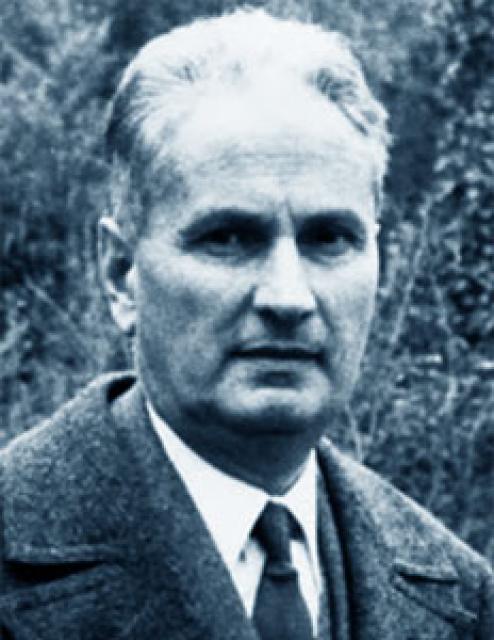
Carlo Cassola
 Italy
Italy- Carlo Cassola: An Italian Master of Modern Literature
- Post-War Novels and the Partisan Struggle
- Later Works and Themes
- Awards and Accolades
Carlo Cassola: An Italian Master of Modern Literature
Early Life and Short StoriesCarlo Cassola was an Italian writer born in 1917. He debuted his literary career with short stories published in 1937. Before World War II, he primarily focused on short works, such as those found in "On the Outskirts" (1942) and "The Inspection" (1942). Cassola's interest in portraying the simple and natural aspects of life was evident in these early works.
Post-War Novels and the Partisan Struggle
After the war, Cassola wrote several novels based on his experiences during the Italian Resistance movement. These works were collected in the anthology "Old Comrades" (1953). Notably, the novel "The Felling of the Forest" (1950) became a significant literary event in the 1950s. This theme of partisan warfare also inspired his famous novel "Romance in Tuscany" (1952) and his masterpiece "The Girl of Bube" (1960). The latter earned him the prestigious Strega Prize and was adapted into a successful film in 1963.
Later Works and Themes
In the 1960s, Cassola continued to publish short stories and novels, including "A Barren Heart" (1961), "The Hunter" (1964), "Remembering Times" (1966), "Ada's Story" (1967), and "Local Railroad" (1968). Themes of fear and sadness emerged in his later novels, such as "Fear and Sorrow" (1970) and the novellas "A Man and a Dog" (1977) and "The Survivor" (1978).
Awards and Accolades
Cassola's literary excellence was recognized with numerous awards. In 1976, he received the Bancarella Prize for "The Rival," and two years later, he was awarded the Bagutta Prize for "A Man and a Dog." Cassola's writings continue to be celebrated as a testament to the power of simplicity and the enduring legacy of the human experience.


