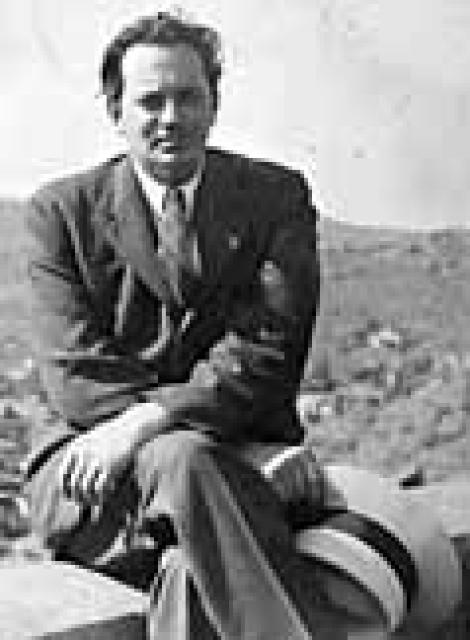
Thomas Wolfe
 USA
USA- Thomas Wolfe: A Literary Giant
- The Playwright's Journey
- A Break with Convention
- The Guggenheim Years
- Changing Perspectives
- Tragic End
- Legacy
Thomas Wolfe: A Literary Giant
Early Life and EducationAmerican author Thomas Wolfe was born on October 3, 1900, in Asheville, North Carolina. Despite an unconventional upbringing, Wolfe displayed exceptional intellect from a young age. At age 15, he enrolled at the University of North Carolina with aspirations to study law.
The Playwright's Journey
After graduating in 1920, Wolfe shifted his focus to drama and attended Harvard University under the guidance of Professor George Pierce Baker. However, he found difficulty finding producers for his unconventional plays, leading him to seek a career in teaching.
A Break with Convention
In 1924, Wolfe began teaching English at New York University. It was during this time that he met Aileen Bernstein, who encouraged him to complete his autobiographical novel, "Look Homeward, Angel" (1929). With the mentorship of renowned editor Maxwell Perkins, Wolfe's masterpiece was hailed by critics.
The Guggenheim Years
A Guggenheim Fellowship in 1930 allowed Wolfe to travel to Europe, marking a significant turning point in his career. Despite the onset of the Great Depression, he diligently worked on his second novel, "Of Time and the River" (1935), which further expanded on his fictional alter ego, Eugene Gant.
Changing Perspectives
In his later years, Wolfe transitioned to Harper & Brothers as his publisher and shifted his focus to new characters in his posthumously published works, "The Web and the Rock" (1939) and "You Can't Go Home Again" (1940).
Tragic End
During a trip to the West Coast in 1938, Wolfe contracted pneumonia, which aggravated a latent tuberculosis infection in his brain. He passed away in Baltimore on September 15, 1938.
Legacy
Thomas Wolfe's body of work, comprising four novels and various short stories, stands as a monumental roman à clef, intimately reflecting his own experiences. His evocative language and lyrical prose style have left an enduring mark on American literature.