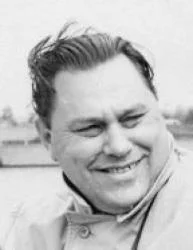
Carlo Cozio
Count Carlo Cozio belonged to a generation of Italian chess thinkers who helped turn the game into a subject for systematic study. An aristocrat, player and theorist, he wrote a wide-ranging manual that organized opening ideas, defensive resources and practical positions. More than two centuries later, his name remains attached to a line in the Ruy López opening: the Cozio Defense.
A Chess-Minded Count
Cozio lived in 18th-century Italy and is generally dated to around 1715–1780. He held the titles Count of Montiglio and Salabue. Few reliable details about his private life survive, but his chess writing gives a clear sense of his interests: he approached the game as both a contest of imagination and a body of knowledge worth arranging, testing and passing on.
His major work was Il giuoco degli scacchi, or The Game of Chess. Cozio wrote it around 1740, though it was not published until 1766, when it appeared in Turin. The delay between manuscript and print means his ideas were circulating in writing before the book reached a broader audience.
A Manual of Attack and Defense
Cozio’s treatise took on chess from several angles. It examined opening variations, especially gambit play, and collected positions from the middle and endgame. It also discussed the rules of a regional form of the game associated with Calabria. Rather than offering only a list of moves, the book presented chess as a structured discipline, with recurring patterns and strategic choices that players could study.
The work reflects a period when opening theory was becoming more formalized. Cozio’s attention to the King’s Gambit and his preservation of earlier analysis helped make the book a valuable source for historians of chess as well as players. The text also records the spirit of its time, when chess writers were beginning to compare lines systematically and argue for particular plans.
The Cozio Defense
Cozio’s name endures most visibly in the Ruy López, one of chess’s best-known openings. After 1.e4 e5, 2.Nf3 Nc6 and 3.Bb5, Black can play 3...Nge7, a move known as the Cozio Defense. The knight develops while preserving options for the central pawns, and the line invites a positional struggle rather than an immediate tactical clash. Naming the variation after Cozio links his 18th-century analysis to a living part of opening theory.
Legacy
Cozio was not a modern tournament celebrity; the surviving record remembers him chiefly through his book and the opening variation that bears his name. His work helped preserve and organize chess knowledge at a formative moment in the game’s literature. The manual remains a window into how players of his era thought about attack, defense and the craft of planning over the board.