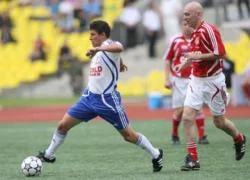
Carlos Alberto Torres
- Early Career in Rio
- Captain of Brazil
- Santos, the Cosmos, and Later Playing Years
- Coaching and Public Life
- Legacy
Carlos Alberto Torres combined the timing of a defender with the composure of a forward. As captain of Brazil’s 1970 World Cup team, he lifted the Jules Rimet Trophy after a 4–1 win over Italy and scored the match’s final goal, a flowing move that became one of football’s defining images. Known to fans as “Capita,” he went on to build a long career in Brazil and the United States as a player, coach, and commentator.
Early Career in Rio
Carlos Alberto Torres was born in Rio de Janeiro on July 17, 1944. He began his professional career with Fluminense, making his first-team debut while still a teenager. A modern right-back with attacking instincts, he was comfortable advancing from defense and joining the build-up, a quality that would become a hallmark of his style.
In the mid-1960s he moved to Santos, where he played alongside Pelé and other stars of Brazilian football. At Santos, Carlos Alberto won major domestic and international honors, including Brazilian titles, the Rio–São Paulo tournament, and the 1968 Intercontinental Cup. His years at the club established him as one of the leading defenders of his generation. He also had spells with Botafogo and later returned to Fluminense, before joining Flamengo.
Captain of Brazil
Carlos Alberto became a regular for Brazil after the 1966 World Cup and was appointed captain for the 1970 tournament in Mexico. The national team, coached by Mário Zagallo, assembled an extraordinary attacking cast, including Pelé, Jairzinho, Tostão, Rivellino, and Gérson. Carlos Alberto’s job was to anchor the defense while reading the game and choosing the moments to join attacks.
Brazil won all six matches, and the captain’s leadership became part of the team’s identity. In the final against Italy on June 21, Brazil had already built a commanding lead when a sequence of quick passes moved the ball across the field. Pelé laid it into Carlos Alberto’s path, and the defender struck a powerful shot into the net in the 86th minute. The 4–1 victory secured Brazil’s third World Cup title and permanent possession of the Jules Rimet Trophy under the rules of the time.
The goal became legendary not only because it ended the final but because it captured the team’s fluid attacking football: the right-back had surged forward to finish a move that involved several of Brazil’s most celebrated players. For many viewers, it remains a symbol of the 1970 side’s confidence and collective brilliance.
Santos, the Cosmos, and Later Playing Years
After leaving Santos in the mid-1970s, Carlos Alberto played for Flamengo and Fluminense before making a high-profile move to the United States. In 1977 he joined the New York Cosmos, where he reunited with Pelé. The club gathered international stars and helped raise the profile of professional soccer in the United States during the North American Soccer League era. Carlos Alberto played for the Cosmos through 1980 and returned for a final spell in 1982.
He retired from playing in the early 1980s after a career that included successful club sides and a defining international triumph. His leadership, tactical intelligence, and ability to contribute in attack helped shape how the attacking full-back role was understood in later generations.
Coaching and Public Life
After his playing days, Carlos Alberto moved into management, coaching clubs in Brazil and abroad. His coaching career took him to teams including Flamengo and Corinthians, among others, and he also worked with the Oman national team. Results varied, but his experience as a former captain and a leading player gave him authority in the football world.
He remained a visible public figure in Brazil, working as a television football commentator known for his direct opinions. He also served on Rio de Janeiro’s city council from 1989 to 1993. The blend of football expertise and outspoken personality kept him in public view long after his last match.
Legacy
Carlos Alberto died in Rio de Janeiro on October 25, 2016, at age 72, after suffering a heart attack. Tributes from FIFA, the Brazilian Football Confederation, former clubs, and players focused on his role as the captain of the 1970 champions and on the famous finish in the final.
His legacy is larger than one goal, though that goal remains an unforgettable part of World Cup history. Carlos Alberto was a commanding defender, an intelligent leader, and an early model of a full-back who could transform defense into attack. His name remains bound to a Brazil team celebrated for its artistry, and to the captain who brought its crowning performance to a close.