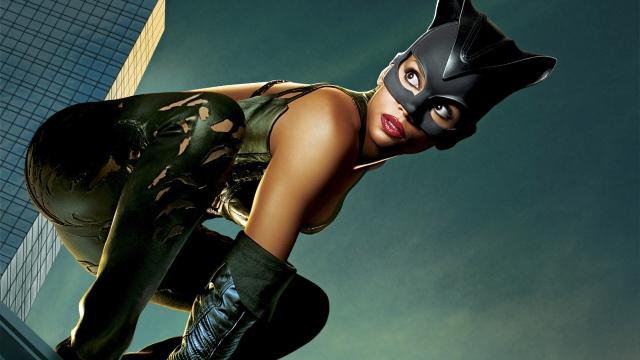
Catwoman
- The Cat first prowls Gotham
- Thief, antihero and Batman’s equal
- A character reinvented on screen
- Why Catwoman endures
Catwoman is one of Gotham City’s most enduring and hard-to-classify figures: a jewel thief, skilled fighter and occasional ally of Batman whose loyalties rarely fit neatly into “hero” or “villain.” In the main DC Comics continuity, she is Selina Kyle, a sharp-witted survivor who uses the Catwoman persona to command attention and keep control of her own story. Her shifting relationship with Batman—part rivalry, part romance, part uneasy alliance—is one of the defining tensions of the character.
The Cat first prowls Gotham
Catwoman made her debut as “the Cat” in *Batman* #1 in 1940, created by writer Bill Finger and artist Bob Kane. She was introduced as a clever jewel thief who could outmaneuver Batman as often as she fought him. The following issue gave her the Cat-Woman name, and the feline motif—sleek costume, agility, a taste for cats and a talent for vanishing—became central to her identity.
Her alter ego, Selina Kyle, was not established until *Batman* #62 in 1950. Early versions of her past changed over time, as was common in decades of superhero storytelling. One early account portrayed her as an amnesiac flight attendant who had turned to theft; later comics gave her a more complicated history shaped by poverty, abuse and life on Gotham’s streets. The 1987 storyline *Batman: Year One* helped reset her background for a new era, presenting Selina as a resourceful survivor who builds a life and a disguise in the city’s underworld.
Thief, antihero and Batman’s equal
Catwoman’s appeal comes from her independence as much as her criminal skill. She is an expert burglar and acrobat, and her whip, claws and knack for improvisation make her a formidable opponent. Yet she often targets the wealthy and powerful, and she repeatedly risks herself to protect people who are vulnerable. Her own ethics are real but flexible: she can steal without remorse, then turn around and fight a threat far more dangerous than herself.
That ambiguity has kept her relationship with Batman in motion. He pursues her as a criminal, respects her abilities and is drawn to her refusal to be controlled. Selina, in turn, recognizes the person behind the mask but resists being treated as a project to reform. Across different continuities, their connection has ranged from flirtation and rivalry to partnership and marriage. Their dynamic works because neither character can fully claim the other or settle the question of what the other should become.
Catwoman’s stories also moved beyond Batman’s shadow. She received her own ongoing comic series in 1993, following a rise in popular attention after Michelle Pfeiffer’s performance in *Batman Returns*. Solo stories have followed Selina through heists, criminal rivalries and attempts to define what she wants from Gotham and from herself.
A character reinvented on screen
Catwoman became a television favorite in the 1960s *Batman* series, where Julie Newmar, Lee Meriwether and Eartha Kitt each gave the role a different mix of glamour, wit and danger. Michelle Pfeiffer’s performance in Tim Burton’s *Batman Returns* (1992) offered a darker reinvention of Selina, whose transformation into Catwoman followed a personal collapse and a fight to reclaim her agency.
Later versions took the character in other directions. Halle Berry starred in the 2004 film *Catwoman* as Patience Phillips, a separate character with a different origin from Selina Kyle. Anne Hathaway played Selina as a resourceful thief in *The Dark Knight Rises* (2012), while Zoë Kravitz portrayed her in *The Batman* (2022) as an observant, streetwise presence in Gotham’s criminal world. Catwoman has also appeared in animated series, films and games, each adaptation adjusting her origins and moral balance for its own version of Gotham.
Why Catwoman endures
Catwoman has lasted because she is always in motion. She can enter a story as the antagonist, leave as an ally and remain impossible to pin down. Her costume and feline style make her instantly recognizable, but the deeper draw is Selina’s self-possession: she makes her own rules, tests the limits of Gotham’s justice and keeps choosing who she will be. That mix of danger, humor and guarded vulnerability continues to make her one of Batman’s most compelling counterparts.