Charles Bonnet
 Switzerland
- Charles Bonnet: Swiss Naturalist and Philosopher
- Scientific Contributions
- Philosophical Pursuits
- Theory of Epigenesis and Pre-Existence
- Later Years and Legacy
Charles Bonnet: Swiss Naturalist and Philosopher
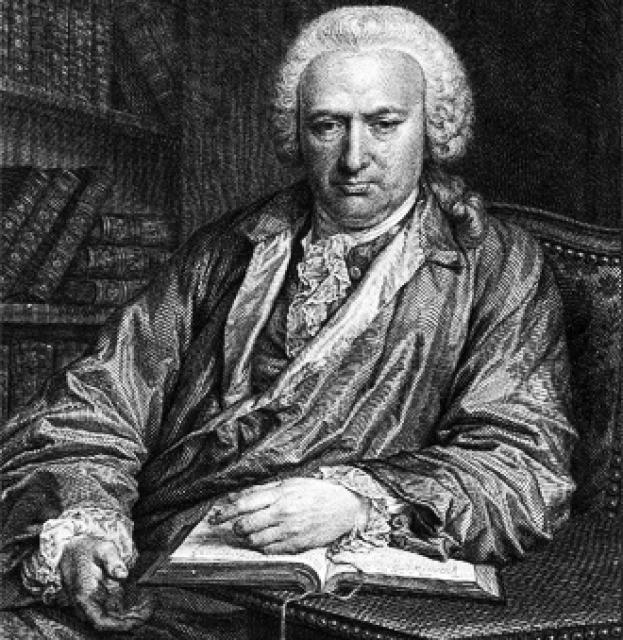
Early Life and EducationCharles Bonnet was born on March 13, 1720, in Geneva, Switzerland. Initially pursuing a legal career, he obtained a doctorate in law in 1743. However, his interests gradually shifted towards natural history.
Scientific Contributions
From 1745, Bonnet embarked on groundbreaking research in entomology. In his "Trait d'insectologie," he described invertebrates, polyps, and worms, and discovered parthenogenesis in aphids. He also identified stigmata, or breathing pores, on insects. Bonnet studied regeneration in animals and plants, and investigated the role of leaves in plant physiology.
Philosophical Pursuits
Due to failing eyesight, Bonnet later focused on philosophy. Influenced by Leibniz and Christian metaphysics, he published essays on psychology and the soul's faculties. Bonnet's works argued for the influence of physiological factors on mental activity, leading to accusations of materialism and fatalism.
Theory of Epigenesis and Pre-Existence
In "Considérations sur les corps organisés," Bonnet proposed the theory of epigenesis, which held that organisms develop gradually from pre-existing germs or "souls." He also advocated for the "continuity of nature," envisioning a vast hierarchy of living beings.
Later Years and Legacy
Bonnet's ideas, including the "indestructibility of organisms," were further developed in his "Palingénesie philosophique." He exerted a significant influence on the philosophical thought of his time, and is considered a precursor to psychophysiology. Charles Bonnet passed away on May 20, 1793, in Genthod near Geneva.