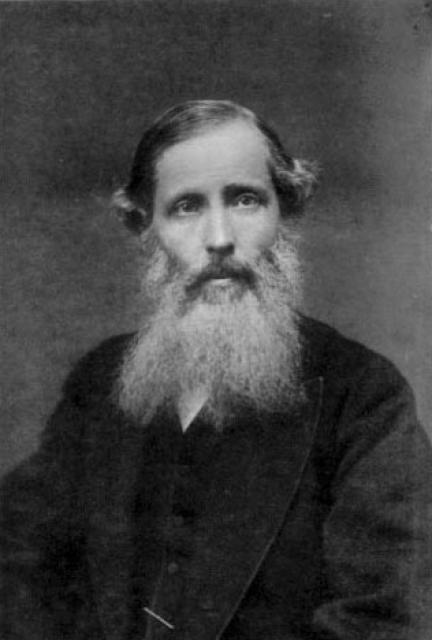
Fedor Sidonskiy
 Russia
- Fyodor Fyodorovich Sidonsky
- Introduction to the Science of Philosophy
- Academic and Ecclesiastical Career
- Philosophical Beliefs
- Later Life and Death
Fyodor Fyodorovich Sidonsky
Early Life and EducationFyodor Fyodorovich Sidonsky was born in the village of Arkhangelskoye in the Tver Governorate on February 11 (23), 1805. He graduated from the Tver Seminary and later from the St. Petersburg Theological Academy, where he stayed as a bachelor to teach English and philosophy.
Introduction to the Science of Philosophy
In 1833, Sidonsky published his major work, "Introduction to the Science of Philosophy." This became the first philosophical "introduction" in the history of Russian thought. Sidonsky defined philosophy as "the solution of the question of the life of the universe, deduced from a strict examination of the nature of our mind and carried out to the determination of the laws by which our human activity must be directed."
Academic and Ecclesiastical Career
Sidonsky taught philosophy at the St. Petersburg Theological Academy and also served as an adjunct professor at St. Petersburg University. He left the academy in 1835 and became a parish priest.
For his contributions, Sidonsky received the Demidov Prize from the Academy of Sciences in 1836, was elected a member of the Imperial Archaeological Society in 1856 and the German National Museum in 1860, and became an honorary Doctor of Philosophy from St. Petersburg University in 1864.
Philosophical Beliefs
Sidonsky viewed the history of philosophy as a gradual progression towards the fullness of truth, albeit not without contradictions. He believed that philosophy possessed an inherent independence and that its encounter with true religion occurred freely and naturally, as "living knowledge of God" served as the "true support of philosophy."
He emphasized the role of philosophical doubt and advocated for the construction of hypothetical judgments as the primary means of "philosophizing reason." These judgments would then transition to the level of "real thoughts."
Sidonsky's philosophical system encompassed three main divisions: logic, physics, and ethics.
Later Life and Death
Sidonsky died in St. Petersburg on December 6 (18), 1873, leaving behind a lasting legacy as a pioneer in Russian philosophy.


