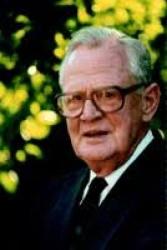
Charles Davenport
 USA
USA- Biography of Charles Davenport
- Early Life and Education
- Work in Eugenics
- Contributions to Science
- Controversial Views
- Legacy
Biography of Charles Davenport
Charles Davenport was born on June 1, 1866, in Stamford, Connecticut, USA. He became a prominent American zoologist and geneticist, known for his role as the founder of the science of "eugenics." Although his contributions to science were significant, Davenport is also remembered for being the progenitor of the Holocaust idea, which resulted in the deaths of millions of people in the 1930s and 1940s.

Early Life and Education
After completing his schooling, Charles Davenport attended the prestigious Harvard University. In 1892, he obtained a Ph.D. in Biological Sciences. Setting aside his ideological aspects, Davenport can be recognized as an outstanding scientist. He went on to teach zoology at Harvard and became the founder of the quantitative approach in taxonomy, the science of classification.
Work in Eugenics
Inspired by the laws of heredity discovered by Gregor Mendel, Charles Davenport became a strong proponent of his theory. Based on Mendel's findings, Davenport established the science of "eugenics" and founded his own laboratory for its study in 1910. His research focused on the laws of heredity in humans, and in 1911, he published the book "Heredity in Relation to Eugenics." For many years, this book served as an official university textbook.
Contributions to Science
In 1912, Charles Davenport was elected as a member of the National Academy of Sciences in the United States. He was particularly interested in understanding the origin of human talent and believed that talent could be inherited. He supported his hypothesis by citing the biographies of dynasties of great composers and scientists. However, modern genetics has since proven that talent is not inherited but rather a manifestation of an individual's personality, which can be nurtured by the environment.
Controversial Views
In the 1920s, Davenport began studying interracial and interethnic marriages and falsely concluded that the mixing of white and black races led to the degradation of humanity. Contrary to his beliefs, subsequent studies have shown that nations with open borders to interethnic marriages produce the most vibrant, intelligent, beautiful, and talented individuals.
Legacy
Charles Davenport devoted significant effort to statistically prove his assumptions. However, historians of science argue that he manipulated research data to fit his racist views. Consequently, Davenport is remembered more for his involvement in nationalist movements and collaboration with German Nazis in the 1930s. He played a role in shaping fascist ideology. Charles Davenport passed away on February 18, 1944, due to pneumonia.