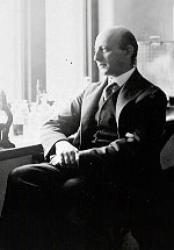
Mario Capecchii
 USA
USABiography of Mario Capecchi
Mario Ramberg Capecchi, an American geneticist of Italian origin, was born on October 6, 1937, in Verona, Italy. His childhood was not without difficulties as he lost his father at a young age, and later his mother was sent to a German concentration camp during World War II. Mario spent almost four years living on the streets, which nearly cost him his life. Fortunately, his mother managed to find him and save him from a grim fate.

Early Life
Mario Capecchi was born into the family of Italian pilot Luciano Capecchi in Verona. During World War II, his mother, Lucy Ramberg, was sent to the Dachau concentration camp for her involvement in an anti-fascist group and distributing anti-fascist leaflets. Anticipating her arrest, Lucy sold most of her belongings and entrusted Mario's care to a peasant family. However, the money was only enough to support him for a year, and Mario had to leave the foster family.

For four years, Capecchi lived on the streets of Italian cities, occasionally finding shelter in orphanages. Hunger and illness posed great threats to his life, but his mother, upon her release, tirelessly searched for her son. Eventually, Lucy found Mario in an Italian hospital. She took him home and provided him with a stable life.

Education and Career
In 1946, Mario's uncle, Edward Ramberg, an American physicist, helped Lucy and Mario return to the United States. They settled in Pennsylvania in the cooperative society called Bryn Gweled, established by Edward Ramberg. In 1956, Mario graduated from high school and went on to study chemistry and physics at Antioch College in Ohio. After obtaining his bachelor's degree, Capecchi moved to the Massachusetts Institute of Technology (MIT), where he focused on physics and mathematics.

Capecchi later joined the laboratory of James D. Watson, one of the co-discoverers of the DNA structure, at Harvard University. In 1967, he earned his Ph.D. in biophysics from Harvard, writing his dissertation under Watson's guidance. In 1969, Capecchi became an assistant professor in the Department of Biochemistry at Harvard Medical School. He was promoted to adjunct professor in 1971 and later joined the University of Utah in 1973.
From 1988 onward, Capecchi actively collaborated with the Howard Hughes Medical Institute. He was also a member of the National Academy of Sciences and worked on various genetic projects. Capecchi's most notable research focused on the study of the genetic code. His groundbreaking experiment involving mice, in which he "turned off" specific genes using stem cells, brought him worldwide acclaim and the Nobel Prize in Physiology or Medicine. He shared the Nobel Prize with Martin Evans and Oliver Smithies, who were also conducting similar experiments.
Capecchi's choice to use mice as his experimental subjects was not accidental. He had been studying a specific DNA sequence in mice that plays a crucial role in the development of embryos in not only mice but also all multicellular organisms. The meticulous study of this gene sequence promises to lead to breakthroughs in genetics, embryology, and many related fields. However, much work remains to be done in this direction.
In May 2008, shortly after the Nobel Committee announced their decision, Marlene Bonelli, a resident of Austria, claimed that Capecchi was her long-lost half-brother. Capecchi personally met with the 69-year-old Austrian woman to confirm their relationship.